Chef's Choice Electric Knife Sharpener Buyer's Guide

Affiliate disclosure: Some links on this page are affiliate links. If you buy through them we earn a small commission at no extra cost to you. Recommendations are research-driven; we don't claim personal use of every product reviewed. Product prices and availability are accurate as of the date published and are subject to change. Always check Amazon for current pricing before purchasing. Learn more.

Quick Picks
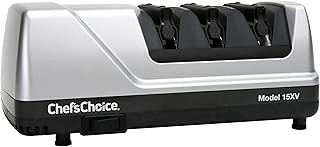
Chef'sChoice 15 Trizor XV Electric Knife Sharpener
Converts knives from 20° factory edge to a sharper 15° edge in three stages
Buy on Amazon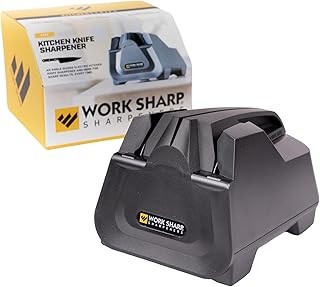
Work Sharp Culinary E5 Electric Knife Sharpener
Flexible abrasive belts remove less metal than rigid wheels , extends blade life
Buy on Amazon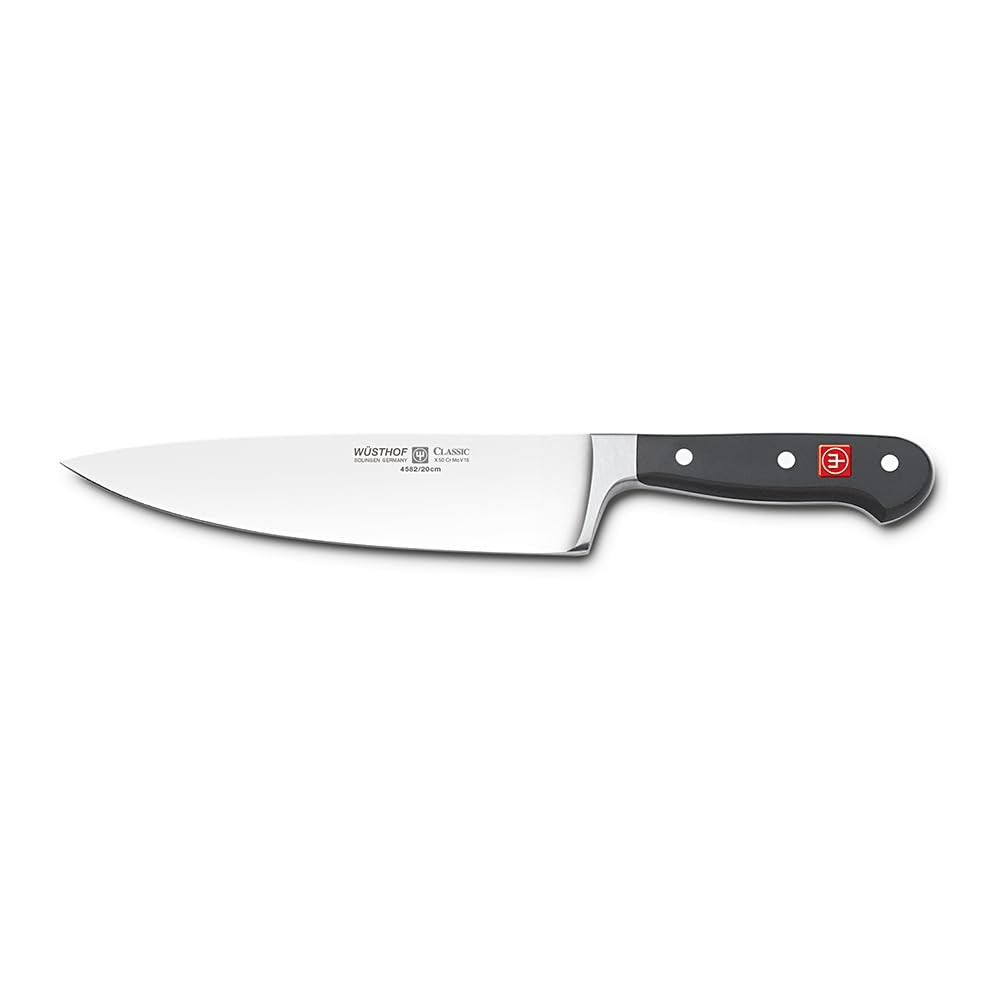
Wüsthof Classic 8-Inch Chef's Knife
Full tang, forged German steel , built to last decades with proper care
Buy on Amazon| Product | Price Range | Top Strength | Key Weakness | Buy |
|---|---|---|---|---|
| Chef'sChoice 15 Trizor XV Electric Knife Sharpener best overall | $$ | Converts knives from 20° factory edge to a sharper 15° edge in three stages | Removes more metal per sharpening than a whetstone , reduces blade lifespan over years | Buy on Amazon |
| Work Sharp Culinary E5 Electric Knife Sharpener also consider | $$ | Flexible abrasive belts remove less metal than rigid wheels , extends blade life | Learning curve to get consistent results on first use | Buy on Amazon |
| Wüsthof Classic 8-Inch Chef's Knife also consider | $$$ | Full tang, forged German steel , built to last decades with proper care | Heavy at 8.5 oz , some cooks prefer the lighter feel of Japanese knives | Buy on Amazon |
| Shun Classic 8-Inch Chef's Knife also consider | $$$ | VG-MAX steel with 68-layer Damascus cladding , razor-sharp out of the box | Hard steel (61 HRC) is more brittle , chip risk on bones or frozen food | Buy on Amazon |
| Victorinox Fibrox Pro 8-Inch Chef's Knife also consider | $ | Best-performing knife under $50 , used in professional kitchens worldwide | Stamped steel loses its edge faster than forged alternatives | Buy on Amazon |
If you own a decent chef’s knife and you’re not maintaining the edge, you’re working harder than you need to. A sharp knife is faster, safer, and more predictable than a dull one, and an electric sharpener is the most practical way for most cooks to stay on top of that. The Chef’sChoice 15 Trizor XV is the name that comes up most often in this category, and for good reason. But “most often mentioned” isn’t the same as “right for every kitchen,” so this guide covers what actually separates these machines, which knives they’re suited to, and when you’d be better off with something else entirely.
If you’re building out your knife kit at the same time, the Knives & Sharpeners hub is a useful starting point for the broader picture.
What to Look For in a Chef’s Choice Electric Knife Sharpener
Sharpening Angle
The angle the machine grinds determines what kind of edge you get. Most Western knives, including the Wüsthof Classic 8-Inch Chef’s Knife, are factory-ground at 20 degrees. Japanese knives like the Shun Classic 8-Inch Chef’s Knife are typically ground to 15 degrees or finer, which produces a thinner, sharper edge but at the cost of some brittleness.
Some sharpeners are locked to one angle. Others are adjustable. If you run a mixed knife collection, adjustability matters.
Abrasive Type and Metal Removal
This is the practical question that most buyers skip over and then regret. Rigid diamond wheels, which Chef’sChoice uses, remove metal efficiently and produce consistent results. They also remove more metal per session than flexible abrasive belts, which means your blades shorten slightly faster over the years. If you’re sharpening a forty-dollar knife, that’s not a concern worth losing sleep over. If you’re sharpening a knife you intend to pass down, it becomes more relevant.
Number of Stages
Most electric sharpeners run two or three stages: coarse grinding to reshape the edge, fine grinding to refine it, and sometimes a stropping or honing stage to align and polish. Three stages generally produce a more finished edge. Two-stage machines work fine for maintenance sharpening when the blade isn’t badly damaged.
What It Won’t Do
Single-bevel Japanese knives, the kind used for sushi preparation, cannot be sharpened on any of these machines. They require a whetstone and a specific technique. If that’s your situation, an electric sharpener is the wrong tool entirely, and no amount of features changes that.
Top Picks
Chef’sChoice 15 Trizor XV Electric Knife Sharpener
The Chef’sChoice 15 Trizor XV is mid-range in price for this category and has been the benchmark for home electric sharpeners for years. The defining feature is the three-stage diamond abrasive system that converts a standard Western knife from its factory 20-degree edge down to 15 degrees. That’s a meaningful change. The resulting edge is noticeably sharper and holds up well through regular cooking.
The Trizor XV handles both Western and Asian-style double-bevel knives. The angle guides make it hard to ruin a blade by holding it wrong, which is the main advantage over a whetstone for anyone who hasn’t put in practice time on stones. Consistent results without skill dependency is genuinely useful.
The honest limitation is metal removal. The diamond wheels are aggressive. Used weekly over five years, you will see measurable blade shortening. If you’re maintaining a Wüsthof Classic that you bought as a lifetime knife, sharpening on a whetstone and touching up with a honing rod will preserve the blade geometry better. The Trizor XV is best suited to knives you own for performance, not heirlooms.
For most home cooks who want a reliable, low-effort way to keep a sharp edge: this is the one to buy. Check current price on Amazon.
Work Sharp Culinary E5 Electric Knife Sharpener
The Work Sharp Culinary E5 uses flexible abrasive belts instead of rigid wheels, and that single design choice changes its character considerably. Belt sharpeners remove less metal per session. Over time, that matters for any quality knife you plan to use for a decade or more.
The E5 offers adjustable angle guides at 15 and 20 degrees and includes a stropping belt for final edge finishing. The stropping stage produces a noticeably polished edge that rigid wheel systems don’t match without an additional honing step.
There is a real learning curve here. The first time or two, results can be uneven until you develop a feel for the belt pressure and the pull-through speed. It’s not difficult once you have it, but if you want consistent results from the first use without any adjustment period, the Trizor XV is more forgiving.
For people who own quality knives, including a Shun Classic or a knife in the Mac Professional Series line, the reduced metal removal of the E5 is worth the slight learning curve investment. Also mid-range in price; check current price on Amazon.
The Knives: What You’re Sharpening Matters
An electric sharpener is only as useful as the knife underneath it, so a few words on the knives in this guide.
Wüsthof Classic 8-Inch Chef’s Knife. Forged German steel, full tang, comfortable bolster balance. The Wüsthof Classic is heavier than Japanese alternatives at 8.5 oz, which some cooks find reassuring and others find tiring over a long prep session. The PEtec edge holds sharpness well, but regular honing with a rod is part of the maintenance routine. It responds fine to the Trizor XV. Premium pricing.
Shun Classic 8-Inch Chef’s Knife. The Shun Classic is the German knife’s counterargument. VG-MAX steel, 68-layer Damascus cladding, lighter and thinner profile. Excellent for precise vegetable work. The tradeoff is brittleness: 61 HRC steel chips on bones and frozen food in a way that German steel tolerates. And the Shun genuinely prefers a whetstone for full resharpening. The Trizor XV will sharpen it at 15 degrees, but purists will argue you’re shortchanging the blade. (I’d say use the E5 if you own a Shun, or learn the stone.) Premium pricing.
The Shun vs. Wüsthof comparison comes down to the work you’re doing. For European-style cooking with whole chickens and hard squash, the Wüsthof wins. For vegetable-forward cooking where thin slices matter, the Shun is better suited. If you’re interested in the Shun line more broadly, the Shun Premier Steak Knives review covers how the Damascus steel performs in everyday cutting scenarios.
Victorinox Fibrox Pro 8-Inch Chef’s Knife. The Victorinox Fibrox Pro is budget-category pricing and it performs well above what that price suggests. Professional kitchens use these knives. The stamped blade loses its edge faster than the forged alternatives, which is actually an argument for owning an electric sharpener: you’ll use it more often. The handle is utilitarian, nothing more. If you need a capable kitchen knife without the premium outlay, this is the honest recommendation.
How to Choose
You Want the Trizor XV If…
You own a mix of Western and Asian-style knives, want consistent results without any technique development, and aren’t particularly worried about long-term metal removal on blades you bought for use rather than longevity. The Trizor XV earns its reputation. The angle conversion feature is useful if you’re running German knives and want the sharper 15-degree profile.
You Want the E5 If…
You own quality knives you’re maintaining for years, care about minimizing metal removal, and are willing to spend twenty minutes getting familiar with the belt system before it becomes routine. If your collection includes a Shun Classic, a Zwilling J.A. Henckels Chef Knife, or anything you paid premium pricing for, the E5 treats the blade more gently over time.
Neither Machine Is Right If…
You own single-bevel Japanese knives. Full stop. No electric sharpener handles them. Get a whetstone, or find a professional sharpening service.
You own only a Victorinox Fibrox and cook casually. An electric sharpener is more investment than the knife warrants. A pull-through sharpener or a basic honing rod will keep a stamped blade serviceable at a fraction of the cost.
A Note on Frequency
Over-sharpening shortens blades faster than anything else. If you’re honing regularly with a steel rod, the full sharpening process on an electric sharpener should be needed only a few times a year for a home cook. More often than that means you’re either cooking at high volume or you’re sharpening out of habit rather than need.
The broader Knives & Sharpeners section covers maintenance tools, knife storage, and how to evaluate edge sharpness if you want to go further into the topic.
Frequently Asked Questions
Can I use the Chef’sChoice 15 Trizor XV on my Shun or other Japanese knives?
The Trizor XV can sharpen double-bevel Japanese knives at the 15-degree setting. It will produce a functional edge. The caveat is that the diamond wheels remove more metal than a whetstone would, and many owners of high-end Japanese knives prefer the Work Sharp E5 or a whetstone to preserve the blade geometry over time. Single-bevel Japanese knives cannot be sharpened on either machine.
How often should I use an electric knife sharpener?
For a home cook using a chef’s knife several times a week, full sharpening on an electric machine is reasonable two to four times per year. Between those sessions, regular honing with a steel rod realigns the edge without removing metal. If you find yourself sharpening monthly, either the blade steel is soft or you’re honing too infrequently.
Does the Trizor XV’s angle conversion damage my Western knives?
It removes more metal than a whetstone during the conversion process. After the initial conversion from 20 degrees to 15 degrees, ongoing maintenance sessions remove less. The edge geometry is changed permanently, which some owners consider an upgrade and others a modification they’d rather not make. If the original factory edge is important to you, skip the conversion.
Is the Work Sharp E5 significantly harder to use than the Trizor XV?
The Trizor XV is more consistent on first use. The E5 requires a short adjustment period to calibrate pull-through speed and pressure, but most users find their footing within two or three sessions. Once you have it, the results are comparable or better on fine-edged knives, with the advantage of lower metal removal.
Do I need an electric sharpener if I already own a honing rod?
They do different jobs. A honing rod realigns the edge without removing metal. An electric sharpener grinds and reshapes the edge when realignment is no longer enough. If your knife pulls through a tomato skin cleanly after honing, you don’t need to sharpen it yet. If it drags or requires pressure, honing won’t fix it and a sharpener will.
Frequently Asked Questions
How does a Chef's Choice electric knife sharpener work?
Chef's Choice electric sharpeners use motorized abrasive wheels arranged in staged slots. You draw the knife blade through each stage — typically from coarse to fine — and the angled guides hold the blade at a consistent edge angle while the wheels grind and polish the edge.
Which Chef's Choice model should I buy for home use?
The Chef's Choice 15 Trizor XV is the most recommended model for home cooks. It sharpens Western and Japanese knives to a 15-degree edge in three stages, producing a sharp, durable edge without requiring any technique beyond drawing the blade through the slots.
Can a Chef's Choice electric sharpener handle serrated knives?
Some Chef's Choice models include a slot designed for serrated blades, but the 15 Trizor XV is primarily optimized for straight-edged knives. Check the specific model's specifications if serrated sharpening is important to you.
Is an electric knife sharpener better than a whetstone?
An electric sharpener is faster, more consistent for beginners, and requires no skill to use. A whetstone removes less metal per session and gives more control over edge geometry, extending blade life over time. For most home cooks who want a sharp knife without a learning curve, electric sharpeners are the practical choice.
Will a Chef's Choice sharpener work on my Shun or Wusthof knives?
Yes. The Chef's Choice 15 Trizor XV works on both Japanese-style knives like Shun (hard steel, 15-degree edge) and Western-style knives like Wusthof (softer steel, typically 20-degree factory edge that the Trizor XV converts to 15 degrees). Note that the angle conversion on Wusthof knives is permanent.
Where to Buy
Chef'sChoice 15 Trizor XV Electric Knife SharpenerSee Chef'sChoice 15 Trizor XV Electric Kn… on Amazon