Cuisinart Enameled Cast Iron: Pros, Cons & Alternatives

Affiliate disclosure: Some links on this page are affiliate links. If you buy through them we earn a small commission at no extra cost to you. Recommendations are research-driven; we don't claim personal use of every product reviewed. Product prices and availability are accurate as of the date published and are subject to change. Always check Amazon for current pricing before purchasing. Learn more.

Quick Picks
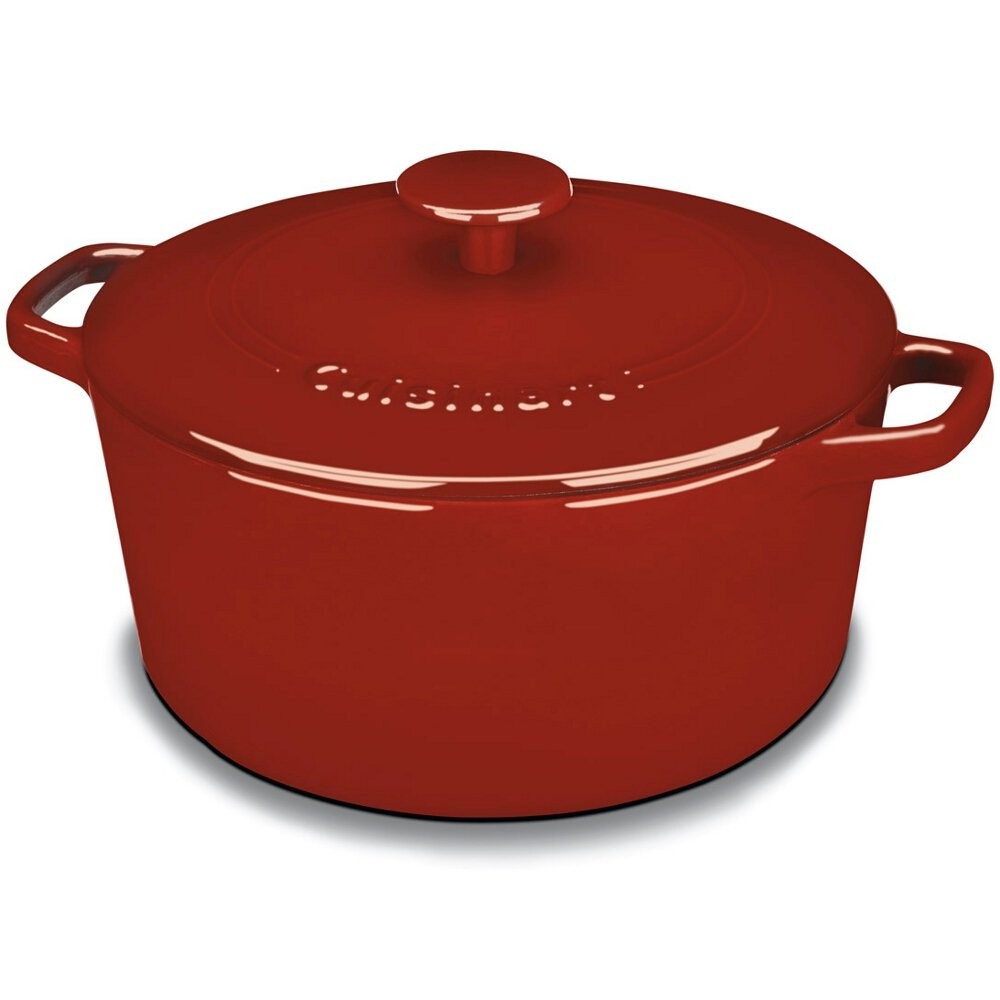
Cuisinart Chef's Classic Enameled Cast Iron 5-Quart Dutch Oven
Enameled interior at under $100 , significantly cheaper than Le Creuset
Buy on Amazon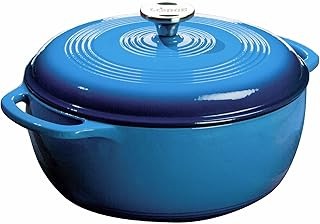
Lodge Enameled Cast Iron Dutch Oven 6-Quart
Enameled interior , no seasoning required, dishwasher safe
Buy on Amazon
Le Creuset 5.5-Quart Round Dutch Oven
Even heat distribution eliminates hot spots for slow braises
Buy on Amazon| Product | Price Range | Top Strength | Key Weakness | Buy |
|---|---|---|---|---|
| Cuisinart Chef's Classic Enameled Cast Iron 5-Quart Dutch Oven best overall | $$ | Enameled interior at under $100 , significantly cheaper than Le Creuset | Enamel quality noticeably thinner than Le Creuset or Staub | Buy on Amazon |
| Lodge Enameled Cast Iron Dutch Oven 6-Quart also consider | $$ | Enameled interior , no seasoning required, dishwasher safe | Enamel quality not as refined as Le Creuset , more prone to chipping over time | Buy on Amazon |
| Le Creuset 5.5-Quart Round Dutch Oven also consider | $$$ | Even heat distribution eliminates hot spots for slow braises | Over $300 at full retail , a significant investment | Buy on Amazon |
| Staub 5.5-Quart Round Cocotte also consider | $$$ | Self-basting spikes on the lid return moisture back to the food | Dark interior makes it harder to monitor fond development | Buy on Amazon |
Cuisinart enameled cast iron is a reasonable place to start this conversation, but it probably shouldn’t be where you end it. If you’re shopping for an enameled Dutch oven and you’ve landed on the Cuisinart name because the price looks right, that instinct makes sense. Mid-range pricing, porcelain enamel interior, oven-safe to 500°F. On paper it checks every box. In practice, there are trade-offs worth knowing before you order, and there are competing options at similar and higher price points that may serve you better depending on how often you cook and what you expect the pan to do over the next decade.
This guide covers four enameled cast iron Dutch ovens across the price spectrum, from the Cuisinart Chef’s Classic Enameled Cast Iron 5-Quart Dutch Oven up through Le Creuset and Staub. It also addresses when you should spend more, when you shouldn’t, and what the actual differences are between a budget enamel coating and a premium one. For broader context on cast iron cookware in general, the Cast Iron hub is a useful reference point before committing to any specific format.
What to Look For in an Enameled Cast Iron Dutch Oven
Enamel Quality
The enamel coating is what separates this category from bare cast iron. It eliminates the need for seasoning, makes cleanup easier, and creates a non-reactive cooking surface that works well for acidic braises, tomato-based dishes, and anything you’d hesitate to cook in bare iron. The practical question is how thick and durable that coating is.
Thin enamel chips. Not immediately, and not always in the first year, but repeated thermal cycling and the occasional metal utensil will find its limits faster than a thicker application. Premium brands apply multiple coats and fire them at higher temperatures. Budget options apply fewer. You can’t see the difference in a product photo, but you’ll eventually feel it in use.
Lid Fit
A Dutch oven is primarily a braising vessel. You’re locking in moisture, building pressure gently, and letting time do the work. A lid that doesn’t seat well loses steam and shortens the effective braising time. If you’ve ever pulled a pot roast at the three-hour mark and found it drier than expected despite following the recipe precisely, an imprecise lid fit is a likely culprit. (A strip of paper at the lid edge is the standard test — the results are instructive.)
Thermal Mass and Heat Distribution
Heavier is not automatically better, but in this category, it generally correlates with better heat retention. A thicker base distributes heat more evenly and holds temperature longer when you add cold liquid or a large piece of meat. For stovetop searing before a braise, a well-distributed base is the difference between a good fond and a scorched spot.
Size
A 5 to 6-quart round Dutch oven is the most versatile size for most households. It handles a 4-pound chicken, a standard no-knead bread recipe, and a pot of soup without being unwieldy on the stovetop. Oval formats have their advocates, but the round shape distributes heat more evenly over a round burner.
Top Picks
Cuisinart Chef’s Classic Enameled Cast Iron 5-Quart Dutch Oven
This Dutch oven is priced in the mid range and is one of the cheaper enameled cast iron options available, which is both its appeal and its limitation. The porcelain enamel interior is genuinely non-reactive, the base is wide and reasonably flat, and the 500°F oven rating covers everything from low-and-slow braises to no-knead bread. For occasional use, it performs adequately.
The enamel quality, however, is noticeably thinner than what you’ll find on a Le Creuset or Staub, and the lid fit is imprecise enough that steam escapes during long braises. Neither issue is disqualifying for someone who uses a Dutch oven a few times a year. If you’re cooking braises two or three times a week, you’ll notice the enamel beginning to show wear within a couple of years, and the lid issue will produce consistently different results than a tighter-fitting competitor.
This is a reasonable purchase for someone equipping a kitchen without a large budget, or for a secondary pot. It’s not a lifetime investment, and I wouldn’t frame it as one.
Lodge Enameled Cast Iron Dutch Oven 6-Quart
The Lodge 6-Quart Enameled Dutch Oven occupies a useful position in this category. It costs roughly the same as the Cuisinart but offers the same thermal mass as bare Lodge cast iron, which has a well-established track record. The enameled interior means no seasoning and dishwasher-safe cleanup, which makes it significantly more approachable than bare Lodge for daily use.
The enamel finish is lighter in color, which means staining is more visible over time, and the coating is more prone to chipping than Le Creuset. It’s not as refined a piece of equipment. But if you want the heat retention of cast iron without the maintenance overhead of bare iron, and you’re not prepared to spend at the premium tier, the Lodge is a more consistent performer than the Cuisinart at comparable mid-range pricing.
Available in multiple colors, for whatever that’s worth to you.
Le Creuset 5.5-Quart Round Dutch Oven
The Le Creuset 5.5-Quart Round Dutch Oven is the most reviewed Dutch oven on the market for reasons that hold up to scrutiny. Even heat distribution, a tight-fitting lid that traps moisture effectively, and enamel quality that has held up in this kitchen through years of use without chipping. The lifetime warranty isn’t marketing copy. It’s a genuine backstop that changes the math on premium pricing when you amortize it over 20 years of use.
The price is premium, and there’s no softening that. Check current price on Amazon, but expect to be in a significantly higher tier than the Lodge or Cuisinart. The honest case for spending more goes like this: if you cook seriously and frequently, a pot you replace every five years at mid-range pricing eventually costs more than a pot you buy once. That calculation only works if you actually use the thing regularly. If your Dutch oven comes out four times a year, the Le Creuset math doesn’t hold.
The 15-plus colorways are either appealing or irrelevant depending on how you feel about kitchen aesthetics. I use the one that was on sale. If you’re also interested in Le Creuset’s broader line, the Le Creuset Provence overview covers additional options in that collection.
Staub 5.5-Quart Round Cocotte
The Staub 5.5-Quart Round Cocotte is the comparison that matters most if you’re deciding between premium options. Priced similarly to Le Creuset, it differs in two meaningful ways.
The lid design uses self-basting spikes on the underside that channel condensation back down onto the food rather than letting it run to the edges. In a long braise, this produces measurably moister results. The second difference is the black matte enamel interior, which develops a patina over time and handles high-heat searing well. It also makes monitoring fond development harder, which is a real trade-off. If you’re building a pan sauce and need to judge color, you’re working somewhat blind compared to Le Creuset’s lighter interior.
The Staub also runs slightly heavier, which improves heat retention but makes it less convenient if you’re lifting it frequently. My preference is the Staub for braises and the Le Creuset for bread. If you’re buying one, the question is which task dominates your cooking. For braiser-format cooking specifically, the Staub 3.5 Qt Braiser is worth considering as a complement or alternative.
How to Choose
If budget is the binding constraint and you cook occasionally, the Lodge is the better choice over the Cuisinart at comparable pricing. The thermal mass is more reliable and the brand has a longer track record with cast iron specifically.
If you’re a frequent cook and you’re deciding between Lodge and Le Creuset, the premium pricing on Le Creuset is justifiable over a long time horizon. The enamel quality difference is real and cumulative.
If you’re already committed to spending at the premium tier and you’re deciding between Le Creuset and Staub, the answer depends on what you cook. Staub for moisture-intensive braises and dishes where lid performance matters most. Le Creuset for bread baking and anything where you need to see the fond developing.
One adjacent category worth considering: if you find yourself wanting a flat cooking surface with similar enamel properties, an enameled cast iron griddle handles searing and stovetop cooking in a way a Dutch oven can’t replicate. And for casseroles and oven-to-table presentation, an enameled cast iron baking dish fills a different gap entirely. Neither replaces a Dutch oven, but both are worth knowing about if you’re building out a cast iron collection rather than making a single purchase.
Before making a final decision on format or brand, the full cast iron cookware section covers the category more broadly and may surface options you haven’t considered.
Frequently Asked Questions
Is Cuisinart enameled cast iron worth buying?
For occasional use and a tighter budget, yes. The Cuisinart Chef’s Classic performs adequately for a few braises a year and the porcelain enamel interior works as advertised. The limitations are enamel thickness over time and an imprecise lid fit. If you’re cooking with a Dutch oven regularly, the Lodge at comparable mid-range pricing is a more durable option, and Le Creuset or Staub are worth the premium investment for frequent, serious use.
How does Cuisinart enameled cast iron compare to Le Creuset?
The enamel coating on Le Creuset is applied in multiple layers, fired at higher temperatures, and holds up to years of daily use without chipping. The Cuisinart uses a thinner enamel application that shows wear faster under regular use. Le Creuset also has a tighter lid fit, better heat distribution, and a lifetime warranty. The price difference is significant. Check current pricing on Amazon for both, but expect Le Creuset to cost roughly three to four times more than the Cuisinart.
Can I use enameled cast iron on an induction cooktop?
Yes. Cast iron is magnetic and works on induction burners regardless of enamel coating. All four Dutch ovens in this guide are induction compatible. The one adjustment worth making on induction is starting at a lower heat setting than you think you need. Cast iron retains heat aggressively, and induction transfers it quickly. Starting low and increasing gradually avoids thermal shock to the enamel.
How do I prevent chipping on enameled cast iron?
Avoid sudden temperature changes. Don’t move a cold Dutch oven directly onto a high flame and don’t put a hot pot under cold running water. Use silicone or wooden utensils rather than metal. For storage, a folded dish towel between stacked pots prevents the lid from contacting the enamel surface under weight. The chipping you’ll see on budget enamel coatings isn’t primarily about care habits. It’s about coating thickness, and that’s determined at manufacturing.
What size Dutch oven should I buy?
A 5 to 6-quart round Dutch oven covers the widest range of tasks for most households. It handles a standard no-knead bread recipe (which requires the pot to be large enough to allow oven spring), a 4-pound chicken or pork shoulder, and a full pot of soup without being awkward to maneuver. If you regularly cook for six or more people, a 7-quart adds useful capacity. Smaller than 5 quarts and you’ll find yourself constrained on bread recipes specifically.
Frequently Asked Questions
What are the main pros and cons of Cuisinart enameled cast iron?
The main advantage is price — Cuisinart enameled Dutch ovens cost a fraction of Le Creuset or Staub while offering similar heat retention and a non-reactive enamel interior. The main drawback is enamel thickness; budget coatings are more prone to chipping over years of regular use than premium alternatives.
Can Cuisinart enameled cast iron go in the oven?
Yes, Cuisinart enameled cast iron is oven-safe up to 500°F. This makes it suitable for braising, baking no-knead bread, and any recipe that transitions from stovetop to oven.
What is the difference between Cuisinart enameled cast iron and bare cast iron?
Enameled cast iron has a porcelain coating that eliminates the need for seasoning and creates a non-reactive surface safe for acidic foods like tomatoes and wine-based sauces. Bare cast iron requires regular seasoning and can react with acidic ingredients but is generally less expensive and more durable long-term.
How long does Cuisinart enameled cast iron last?
With careful hand-washing and avoidance of metal utensils, Cuisinart enameled cast iron can last 5–10 years or more. However, the thinner enamel coating is more susceptible to chipping over time compared to premium brands like Le Creuset, which are designed to last a lifetime.
Is Cuisinart enameled cast iron worth buying over Le Creuset?
If budget is the primary concern and you cook braised dishes occasionally, Cuisinart is a practical choice. If you cook with your Dutch oven several times a week and expect it to last 20+ years, investing in Le Creuset or Staub is likely more cost-effective in the long run due to their superior enamel durability.
Where to Buy
Cuisinart Chef's Classic Enameled Cast Iron 5-Quart Dutch OvenSee Cuisinart Chef's Classic Enameled Cas… on Amazon