Staub 3.5 Qt Braiser Review: Worth the Price?

Affiliate disclosure: Some links on this page are affiliate links. If you buy through them we earn a small commission at no extra cost to you. Recommendations are research-driven; we don't claim personal use of every product reviewed. Product prices and availability are accurate as of the date published and are subject to change. Always check Amazon for current pricing before purchasing. Learn more.

Quick Picks
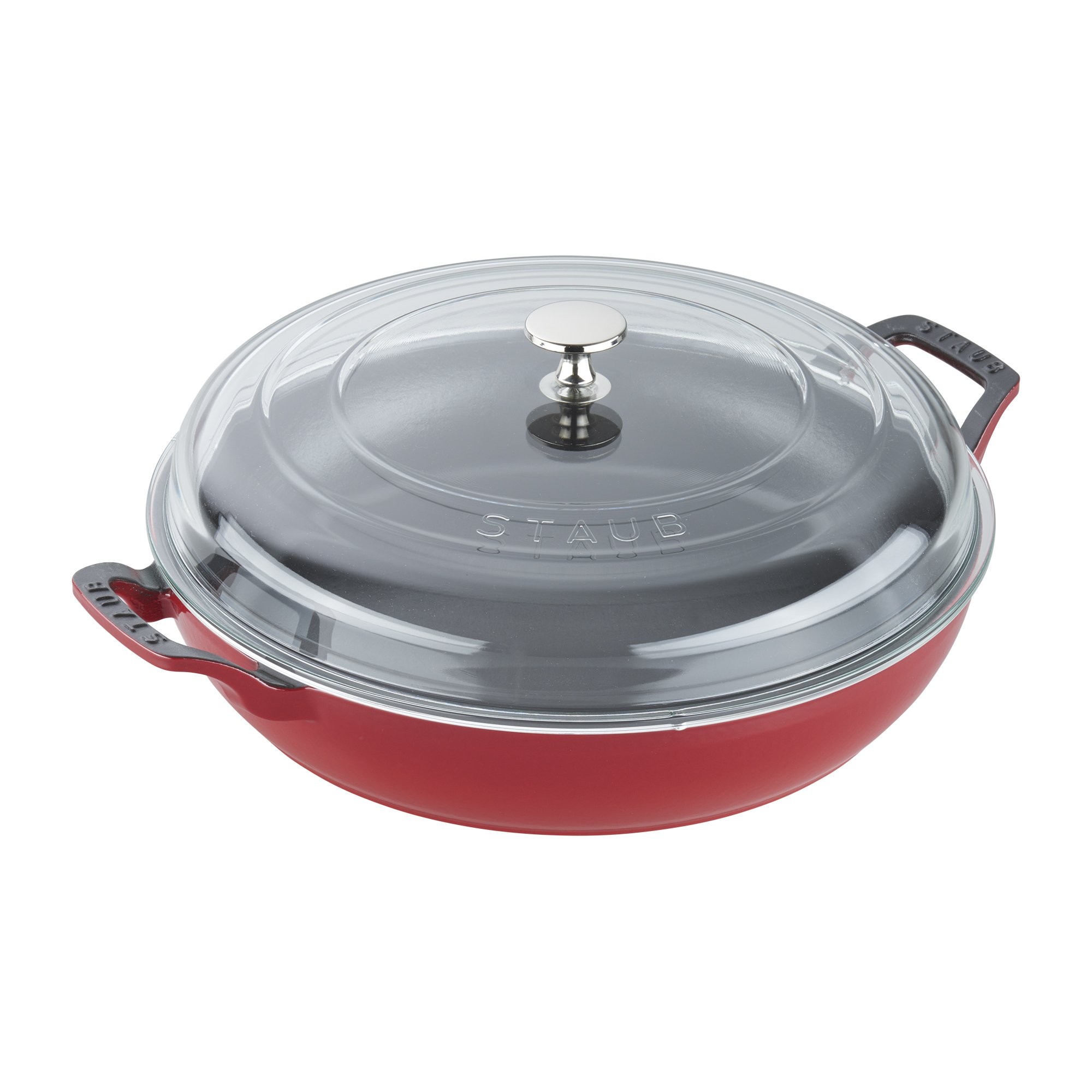
Staub 3.5-Quart Braiser
Wider, shallower shape than a Dutch oven , ideal for bone-in chicken and short ribs
Buy on Amazon
Staub 5.5-Quart Round Cocotte
Self-basting spikes on the lid return moisture back to the food
Buy on Amazon
Lodge Enameled Cast Iron Dutch Oven 6-Quart
Enameled interior , no seasoning required, dishwasher safe
Buy on Amazon| Product | Price Range | Top Strength | Key Weakness | Buy |
|---|---|---|---|---|
| Staub 3.5-Quart Braiser best overall | $$$ | Wider, shallower shape than a Dutch oven , ideal for bone-in chicken and short ribs | Less versatile than a Dutch oven , braiser shape limits use as a stockpot | Buy on Amazon |
| Staub 5.5-Quart Round Cocotte also consider | $$$ | Self-basting spikes on the lid return moisture back to the food | Dark interior makes it harder to monitor fond development | Buy on Amazon |
| Lodge Enameled Cast Iron Dutch Oven 6-Quart also consider | $$ | Enameled interior , no seasoning required, dishwasher safe | Enamel quality not as refined as Le Creuset , more prone to chipping over time | Buy on Amazon |
| Le Creuset 5.5-Quart Round Dutch Oven also consider | $$$ | Even heat distribution eliminates hot spots for slow braises | Over $300 at full retail , a significant investment | Buy on Amazon |
The Staub 3.5-Quart Braiser is a specific tool for a specific job, and if that job is braising bone-in chicken thighs or short ribs, it does that job better than anything else in this kitchen. But “better for braising” is not the same as “better, full stop,” and the distinction matters when you’re looking at premium pricing for a vessel that won’t pull double duty as a stockpot. This guide works through what the braiser actually does, where it sits relative to the Staub 5.5-Quart Round Cocotte and the Le Creuset 5.5-Quart Round Dutch Oven, and whether the Lodge Enameled Cast Iron Dutch Oven covers enough of the same ground at a lower price point to make you question the whole exercise.
If you’re building out a cast iron collection or looking for context on how these pieces fit together, the Cast Iron hub is worth a read before committing.
What to Look For in a Braiser
Shape and Capacity
A braiser is wider and shallower than a Dutch oven. The 3.5-quart Staub measures roughly 12 inches across with sides that sit around 2.5 inches high. That geometry exists for a reason. When you’re browning four bone-in chicken thighs before braising, you need surface contact, not vertical walls that trap steam and make your fond soggy. A Dutch oven at the same capacity gives you less floor space and more height, which suits liquid-heavy applications like soup or stock.
The 3.5-quart size is the right call for two to four people. I’ve fit six short ribs in mine with room to spare. If you’re regularly cooking for six or more, the 5.5-quart cocotte starts to make more sense purely on volume, though the shape trade-off remains.
Lid Design
Staub’s lid engineering is worth understanding before you buy anything in their lineup. The underside of every Staub lid is fitted with small spikes or a ridged surface, depending on the model, that collect condensation and return it to the food in a dispersed pattern rather than letting it run to the edges. In a long braise, that matters. The Le Creuset lid is flat on the underside and relies on a tight seal to trap moisture. Both work. The Staub approach returns moisture more evenly across the surface area of the food, which in a shallow braiser is the entire cooking surface.
Interior Finish
Staub uses a black matte enamel interior on all its enameled cast iron. Le Creuset uses a light sand or cream interior on most pieces. The Lodge enameled line also uses a lighter interior. The practical difference is visibility: a cream interior lets you see fond development and color changes clearly. The Staub black interior does not. (I’ve burned a fond more than once while being convinced nothing was happening, which I realize is a specific complaint but it’s a real one.)
Over time, the Staub black interior builds what the company calls a patina, essentially a polymerized layer from cooking fats that functions similarly to the seasoning on bare cast iron. It contributes to nonstick behavior and is a genuine benefit over years of use. The trade-off with visibility is real, though, not cosmetic.
Weight and Heat Retention
All cast iron retains heat well. That’s the point. But wall thickness varies between manufacturers. Staub runs slightly heavier than Le Creuset in comparable sizes. The Lodge is comparable to Staub on thermal mass at a fraction of the price. Where the Lodge falls short is enamel quality, not heat performance.
Top Picks
Best for Braising: Staub 3.5-Quart Braiser
The Staub 3.5-Quart Braiser is the best purpose-built braising vessel I’ve used. The combination of wide cooking surface, self-basting lid, and black matte enamel that builds character over time makes it the obvious pick if braising is what you’re actually doing. Bone-in chicken, short ribs, lamb shanks, pork shoulder cut into portions: all of these benefit from the shape in ways that a Dutch oven doesn’t replicate.
At premium pricing, this is not a casual purchase. Check current price on Amazon. The objection I’ve heard is that a braiser is a single-technique vessel, which is fair. My response is that if you braise regularly, the result quality justifies the specialization. If you braise twice a year, it doesn’t.
What it won’t do: boil pasta, make stock, bake no-knead bread. If you need one pot to cover all of that, this isn’t it.
Best All-Around Staub: Staub 5.5-Quart Round Cocotte
The Staub 5.5-Quart Round Cocotte is what most people should buy if they want one Staub piece and want it to do everything. The round cocotte has the self-basting lid, the black matte interior, and the same Staub construction, but the deeper shape lets it function as a Dutch oven. You can braise in it, though the narrower floor-to-wall ratio is less ideal for getting a hard sear on large cuts.
Comparable to the Le Creuset 5.5-Quart at roughly the same price point, the Staub differentiates on lid design and interior finish. The Le Creuset’s lighter interior is easier to monitor. Staub’s heavier build retains heat marginally longer. Eight years of cooking with the All-Clad D3 in a previous kitchen made me particular about heat consistency, and the Staub cocotte handles uneven burners better than most.
The Staub Pumpkin Cocotte is a different shape in the same product family, if you’ve looked at that before and wondered how the round cocotte compares.
Best Value: Lodge Enameled Cast Iron Dutch Oven 6-Quart
The Lodge Enameled Cast Iron Dutch Oven costs roughly half what the Staub or Le Creuset options run, carries the same thermal mass, and has an enameled interior that requires no seasoning and tolerates the dishwasher. For a buyer who wants the performance of cast iron without the maintenance of bare cast iron, and without the premium price, this is the honest answer.
The enamel chips more easily over time than the Le Creuset finish. I’ve seen Lodge pieces develop chips after two years of normal use. The lighter porcelain finish also shows staining from tomato or wine-based braises more readily. Neither issue affects cooking performance. If longevity of finish matters to you, the price gap between Lodge and Le Creuset starts to look different over a ten-year horizon.
Best Premium Dutch Oven: Le Creuset 5.5-Quart Round Dutch Oven
The Le Creuset 5.5-Quart Round Dutch Oven is the most reviewed Dutch oven on the market for straightforward reasons: it’s been manufactured consistently for decades, the enamel quality is the best in this category, and the lifetime warranty is not a marketing footnote. If you crack the enamel, they replace it.
One of the pricier options in this class. The longevity math works in its favor if you cook regularly and keep it for twenty years, which I have done with mine. The light interior is the practical advantage over Staub: if monitoring fond and color matters to how you cook, the Le Creuset is easier to use day to day. The no-knead bread result in this pot is also better than in any other vessel I’ve tried, which comes down to the tight lid seal and steep walls holding steam.
If you’re interested in how other enameled pieces from this category perform beyond Dutch ovens, the enameled cast iron baking dish piece covers some adjacent territory.
How to Choose
Start with what you actually cook. If your regular rotation includes braised chicken, lamb shanks, short ribs, or anything where you want a wide sear surface followed by low, slow, covered cooking, the Staub 3.5-Quart Braiser is the right call. Buy it, use it for what it’s designed for, and don’t expect it to be a soup pot.
If you want one pot that covers braising, soups, stocks, and bread, the Staub 5.5-Quart Cocotte and the Le Creuset 5.5-Quart Dutch Oven are direct competitors at comparable prices. The Staub wins on lid design and heat retention for long braises. The Le Creuset wins on interior visibility and enamel longevity. My advice would be to handle both in a kitchen store before deciding, because the weight difference is meaningful and personal preference about the dark interior is genuinely subjective.
If the premium price on any of those is an obstacle, the Lodge Enameled Dutch Oven does the same job at a different price point. The enamel won’t last as long. The cooking result is not meaningfully different.
One practical note: if you’re building a collection rather than buying a single piece, the braiser and a Dutch oven complement each other well. The braiser handles the specific jobs it’s built for, and the Dutch oven covers everything else. I run that combination and reach for the braiser more than I expected. It’s worth reading through the broader cast iron cookware options before deciding whether to start with one piece or two, particularly if you’re also considering pieces like an enameled cast iron griddle for stovetop work.
Frequently Asked Questions
Is the Staub 3.5-Quart Braiser worth the price if I already own a Dutch oven?
If you braise regularly, yes. The wider, shallower shape gives you more direct surface contact for searing, and the self-basting lid returns moisture more evenly across the food than a standard Dutch oven lid. If you braise occasionally and your Dutch oven is already doing the job adequately, the incremental improvement may not justify the premium pricing.
What’s the practical difference between the Staub braiser and the Staub cocotte?
Shape and versatility. The braiser is wider and shallower, optimized for searing and braising in one vessel. The cocotte is deeper and more vertical, which makes it useful for soups, stocks, and bread in addition to braising. The braiser does its specific job better. The cocotte does more things adequately.
How does the dark Staub interior compare to Le Creuset’s light interior for everyday cooking?
The Staub black matte interior builds a useful patina over time and contributes to nonstick behavior. The Le Creuset cream interior lets you monitor fond development and color changes more easily. In a long braise where you’ve already built your fond before adding liquid, the difference is minimal. For sautéing or any technique where you’re watching color closely, the Le Creuset is easier to use.
Can the Staub braiser go in the oven?
Yes. All Staub enameled cast iron is oven-safe to 500°F, including the lid. The knob on older Staub lids was sometimes rated lower, but current production brass and stainless knobs handle full oven temperatures. Check the specific model if you’re buying secondhand.
Is the Lodge Enameled Dutch Oven a reasonable substitute for Staub or Le Creuset?
For cooking performance, largely yes. Thermal mass is comparable, the enameled interior is easy to maintain, and the results in a braise or a soup are not materially different. The gap is in enamel durability over time. Lodge enamel chips more readily, and the lighter interior stains more visibly. If you cook heavily and plan to own the piece for fifteen-plus years, the premium options hold up better. If you want solid cast iron performance without the premium price, the Lodge is a fair choice.
Frequently Asked Questions
What is a braiser used for, and how is it different from a Dutch oven?
A braiser is wider and shallower than a Dutch oven, designed specifically for browning and braising proteins like bone-in chicken thighs, short ribs, and lamb shanks. The wide base gives more surface contact for searing, while the lid traps moisture during the braise. A Dutch oven is taller and better suited for soups, stocks, and bread baking.
Is the Staub 3.5 qt braiser large enough for a family of four?
Yes — the 3.5-quart Staub braiser comfortably fits six bone-in short ribs or four large chicken thighs with liquid, which is a full dinner for four. For larger gatherings or proteins over four pounds, consider a 5.5-quart cocotte instead.
How does the Staub braiser lid help during cooking?
The cast iron lid on the Staub braiser has small spikes on the interior that collect steam as it rises, then redirect the condensation back down over the food rather than letting it run to the rim and escape. This self-basting design keeps long braises noticeably more moist than a standard tight-fitting lid.
Can the Staub braiser go in the oven?
Yes — Staub enameled cast iron is oven-safe to 900°F, meaning it can go from stovetop searing to a low-and-slow oven braise without any issues. The lid is safe at the same temperature.
Is the Staub braiser worth the price compared to Lodge enameled cast iron?
The Lodge enameled Dutch oven costs significantly less and handles most of the same cooking tasks. Where Staub justifies its premium is in the lid design, the quality of the enamel finish, and the wide braiser shape that Lodge doesn't offer at comparable quality. If braising is a regular part of your cooking, the Staub is worth the difference.
Where to Buy
Staub 3.5-Quart BraiserSee Staub 3.5-Quart Braiser on Amazon