Emile Henry Tagine Review & Buying Guide

Affiliate disclosure: Some links on this page are affiliate links. If you buy through them we earn a small commission at no extra cost to you. Recommendations are research-driven; we don't claim personal use of every product reviewed. Product prices and availability are accurate as of the date published and are subject to change. Always check Amazon for current pricing before purchasing. Learn more.
Quick Picks
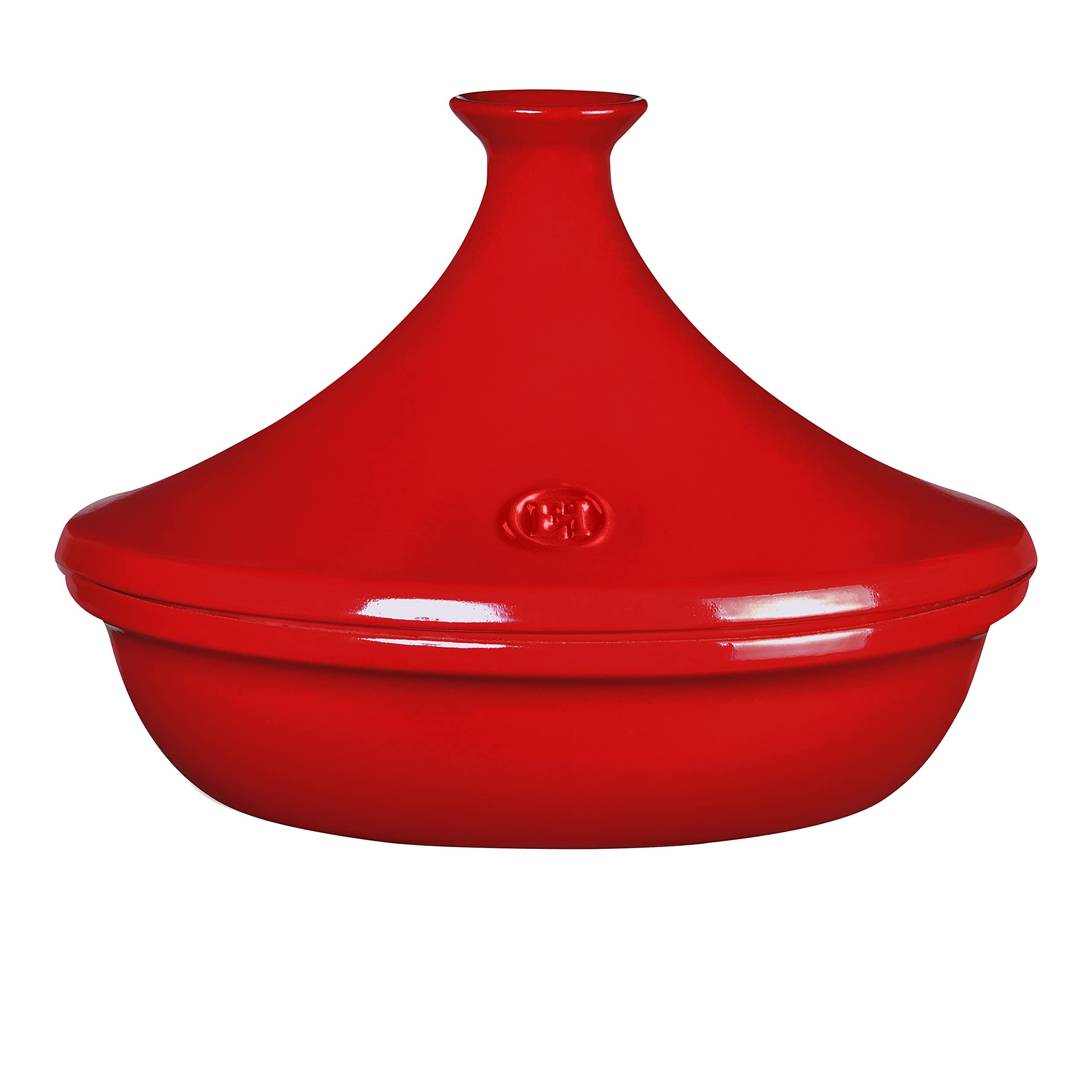
Emile Henry Flame Tagine 3.7-Quart
Conical lid channels condensation back to the base , authentic tagine cooking
Buy on Amazon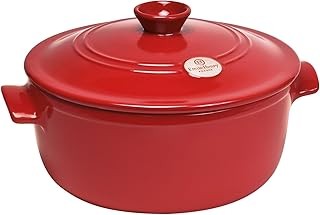
Emile Henry 5.5-Quart Flame Dutch Oven
Made from Burgundy clay , lighter than cast iron, excellent heat retention
Buy on Amazon
Le Creuset 5.5-Quart Round Dutch Oven
Even heat distribution eliminates hot spots for slow braises
Buy on Amazon| Product | Price Range | Top Strength | Key Weakness | Buy |
|---|---|---|---|---|
| Emile Henry Flame Tagine 3.7-Quart best overall | $$$ | Conical lid channels condensation back to the base , authentic tagine cooking | Single-use shape , not versatile beyond tagine and similar braises | Buy on Amazon |
| Emile Henry 5.5-Quart Flame Dutch Oven also consider | $$$ | Made from Burgundy clay , lighter than cast iron, excellent heat retention | Not suitable for high-heat searing , clay is best for low-and-slow | Buy on Amazon |
| Le Creuset 5.5-Quart Round Dutch Oven also consider | $$$ | Even heat distribution eliminates hot spots for slow braises | Over $300 at full retail , a significant investment | Buy on Amazon |
| Lodge 6-Quart Cast Iron Dutch Oven also consider | $ | Thick walls retain heat evenly for long braises and stews | Requires seasoning maintenance , can rust if left wet | Buy on Amazon |
If you’ve been cooking North African food for any length of time, you already know the tagine question isn’t really about the vessel. It’s about whether you’re serious enough about the technique to buy one. A tagine is not a Dutch oven with a fancy hat. The conical lid does specific work: it catches steam, condenses it, and returns moisture to the braise rather than letting it escape. That’s not decoration. That’s the entire cooking mechanism.
This guide covers the Emile Henry Flame Tagine 3.7-Quart as the primary recommendation, plus three alternatives worth knowing about if the tagine doesn’t fit your situation. If you’re new to ceramic cookware in general, my Cast Iron hub has broader context on heat retention, materials, and what separates good slow-cooking vessels from mediocre ones.
What to Look For
Material: Ceramic vs. Cast Iron vs. Enameled Cast Iron
Most tagines are ceramic, and there’s a reason for that. Clay conducts heat slowly and evenly, which suits the low-and-slow cooking style traditional to Moroccan and North African dishes. Cast iron can do similar braising work, but its thermal properties are different, and it doesn’t have the shape.
The critical variable in ceramic tagines is whether the piece is flame-safe. Many decorative tagines are not. They’re built for oven use only, and if you put them on a gas burner without a diffuser, you risk cracking the base. Emile Henry’s Flame series uses a specific Burgundy clay formula that handles direct heat, induction, and open flame without needing a diffuser. That distinction matters.
Size
3.7 quarts sounds small until you realize you’re cooking a braise that loses very little moisture. Because the condensation cycle keeps liquid in the pot, a 3.7-quart tagine feeds four people comfortably. If you’re cooking for six regularly, you’d want to look at larger formats, but for most households, it’s the right call.
Practical Handling
Ceramic is fragile. Not dramatically fragile, but it does not survive being dropped onto a tile floor. If you’ve ever broken a casserole dish by pulling it too sharply from an oven rack, you know the category of risk. The Emile Henry glaze is scratch-resistant and dishwasher-safe, but the base and lid need to be stored carefully.
Top Picks
Best Tagine: Emile Henry Flame Tagine 3.7-Quart
The Emile Henry Flame Tagine 3.7-Quart is the right answer for anyone who wants to cook actual tagine dishes at home. Premium pricing, but there is no real competitor at this price point doing the same job in the same material. Most ceramic tagines at lower price points aren’t flame-safe, which means they require a diffuser or oven-only cooking. Emile Henry’s Flame technology removes that constraint.
The conical lid isn’t aesthetic flourish. It creates a circulation loop: steam rises, hits the cone, cools, and falls back into the base. That’s what keeps a lamb tagine with preserved lemon moist after two hours of cooking without adding stock every thirty minutes. If you’ve ever tried to replicate this in a standard Dutch oven and wound up with a stew instead of a tagine, that difference is the reason.
It works on gas, electric, induction, and a wood fire if you happen to cook that way. Oven-safe to 500°F. Dishwasher-safe, though I hand-wash mine because I find the glaze holds up better. The range of colors is legitimately attractive, and it goes from stove to table without looking like a piece of equipment.
The honest limitation is single-purpose use. A tagine is not a vessel you reach for on a Tuesday when you need to cook pasta or braise short ribs. It does one thing and does it extremely well. If you cook North African food regularly, that’s a reasonable trade. If you’re buying it for occasional use, consider whether the cabinet space justifies it.
Check current price on Amazon.
Best Ceramic Dutch Oven Alternative: Emile Henry 5.5-Quart Flame Dutch Oven
The Emile Henry 5.5-Quart Flame Dutch Oven is the right alternative if you want Emile Henry’s Burgundy clay construction in a more versatile format. Same flame-safe material, same scratch-resistant interior, but a round Dutch oven shape that handles braises, soups, no-knead bread, and slow-cooked stews with equal competence.
Where it earns its place is weight. Anyone who has lifted a 5.5-quart enameled cast iron Dutch oven full of soup and tried to pour it into a serving bowl without dropping it knows what I mean. (That group is larger than cookware marketers acknowledge.) The Emile Henry piece is meaningfully lighter, and it handles the thermal shock of going from freezer to oven in a way that cast iron cannot. It’s also better suited for baking bread than an enameled cast iron Dutch oven, because clay breathes differently.
The trade-off is searing. Low-and-slow is the right mode for this material. If your cooking style involves browning meat hard before a braise, you’ll want cast iron or stainless for that step. The clay doesn’t like aggressive high heat.
If you cook a lot with baked dishes, the Emile Henry Lasagna Dish is made from the same Burgundy clay and worth knowing about as a companion piece.
Check current price on Amazon.
Premium Cast Iron Standard: Le Creuset 5.5-Quart Round Dutch Oven
The Le Creuset 5.5-Quart Round Dutch Oven is the reference point for enameled cast iron. It’s premium pricing at the higher end of the category, costs roughly twice the Lodge unit, and it’s the most-reviewed Dutch oven on the market for a reason. I cooked with the older version for years before switching to different formats, and the heat distribution is genuinely exceptional. There are no hot spots. A braise started on a gas burner at low heat requires almost no intervention.
The lifetime warranty changes the price calculation. If you keep this piece for twenty years, which is a realistic expectation, the per-year cost looks different than it does at checkout. That’s not rationalization, it’s just how durable goods work.
The lid is heavy, which matters if you’re frequently lifting it to check on a long braise. The color range is extensive, and if you care about what your cookware looks like on the table, that matters. If you don’t, it doesn’t.
Check current price on Amazon.
Best Budget Option: Lodge 6-Quart Cast Iron Dutch Oven
The Lodge 6-Quart Cast Iron Dutch Oven is the value case. Budget category pricing, fraction of what the Le Creuset costs, and the braising performance for long-cooked stews and beans is comparable. Pre-seasoned bare cast iron means no enamel to chip, which matters if your pots take mechanical abuse.
The trade-offs are real. It requires maintenance. If you leave it wet, it rusts. It’s heavier than comparable enameled pieces, which for some people is a deciding factor. And bare cast iron reacts with acidic ingredients over time, so long tomato braises or wine-heavy sauces will strip seasoning if cooked too frequently without re-seasoning.
If you’re already managing a seasoned cast iron collection, this is a natural addition. If you want something you can forget in the cabinet for six months and pick up ready to use, the Lodge requires more attention than the enameled alternatives. Our coverage of vintage Lodge cast iron cookware covers the seasoning side of this in more detail, if that part of the maintenance question concerns you.
Check current price on Amazon.
How to Choose
If your question is specifically about tagine cooking, the answer is the Emile Henry Flame Tagine 3.7-Quart. There’s no substitute for the shape when you’re making dishes where the condensation cycle is the technique. Don’t buy a Dutch oven and expect the same result.
If you want a versatile slow-cooking vessel and weight is a concern, the Emile Henry Flame Dutch Oven is worth the premium over cast iron. If weight isn’t the issue and you want the longest-lasting piece you can buy in this category, the Le Creuset is the answer. The Lodge is the right choice if you want braising performance without spending at premium levels and you’re willing to do the seasoning maintenance.
One question worth asking yourself: how often will you use it? A tagine bought for two uses a year is a lot of cabinet space for a single-purpose vessel. A Le Creuset Dutch oven used twice a week for a decade is arguably underpriced at full retail. Frequency changes the math.
The broader cast iron cookware category on this site covers baking dishes, grill pans, and other formats if you’re making multiple purchases and want to understand how these pieces fit together. The enameled cast iron baking dish and enameled cast iron grill pan are particularly worth reviewing if you’re building out a slow-cooking collection around a central Dutch oven.
My pick stays the Emile Henry tagine for anyone who cooks North African food with any regularity. The price is what it is. The cooking result is what it is. Those two things are in reasonable proportion.
Frequently Asked Questions
Can the Emile Henry tagine be used on an induction cooktop?
Yes. The Flame series is compatible with induction, gas, electric, and direct flame. Most decorative tagines are not induction-compatible, so this is a meaningful distinguishing feature if you cook on induction. No diffuser required.
Is a tagine just a decorative Dutch oven?
No. The conical lid shape does active work. As steam rises during cooking, it hits the cone, cools, and falls back into the base. This keeps moisture in the dish throughout a long braise without adding liquid. A Dutch oven with a flat lid loses steam differently and produces a different result. If you want to replicate tagine cooking, the shape matters.
How does the Emile Henry Flame Dutch Oven compare to Le Creuset in everyday use?
The Emile Henry ceramic is lighter, handles freezer-to-oven use, and is better suited for baking bread. The Le Creuset enameled cast iron gets hotter and holds searing temperatures better, comes with a lifetime warranty, and is more widely available in retail stores for in-person inspection. For strictly low-and-slow cooking, the performance gap is narrow. For high-heat searing before a braise, Le Creuset has the advantage.
Does the Lodge Dutch oven work for bread baking?
Yes, and it works well. The thick walls retain heat evenly, and the pre-heated Dutch oven traps steam in the early minutes of a bake, which is what creates a hard crust. The lack of enamel means you can preheat it aggressively without concern about chipping. The trade-off is that acidic doughs (sourdough especially) can interact with bare cast iron if left in contact for extended periods, so prompt removal after baking is the right practice.
What’s the difference between the 3.7-quart and larger tagine formats?
Tagines lose very little moisture during cooking, so a 3.7-quart feeds four people with most standard recipes. The condensation cycle keeps liquid in the pot rather than evaporating it. If you cook regularly for six or more people, or if you prefer having leftovers, a larger format makes sense. For a household of two to four, the 3.7-quart is the practical choice and takes up less storage space.
Frequently Asked Questions
Can the Emile Henry Flame Tagine be used directly on a gas burner without a diffuser?
Yes. Unlike most decorative ceramic tagines, the Emile Henry Flame series uses a Burgundy clay formula rated for direct flame, induction, and electric cooktops without a diffuser. This distinction matters — oven-only tagines will crack on a burner, but the Flame model is designed for stovetop use from the start.
Is a tagine functionally different from a Dutch oven, or just differently shaped?
The shape difference is functionally significant. The tagine's conical lid channels condensation back down into the base rather than allowing steam to escape or pool at the flat lid surface. This keeps the braise moist without adding liquid and concentrates flavors in a way a Dutch oven lid doesn't replicate. A Dutch oven can approximate the result, but it's a workaround, not the same technique.
What is the capacity of the Emile Henry Flame Tagine 3.7-Quart, and how many people does it serve?
The 3.7-quart tagine comfortably serves four people for a typical North African braise like chicken with preserved lemons or lamb with apricots. It's sized for the home kitchen rather than entertaining large groups — for six or more portions, a larger tagine or a Dutch oven with a more generous capacity is a better fit.
Can I use a Le Creuset Dutch oven as a substitute for a tagine?
You can approximate tagine cooking in a Dutch oven by using minimal liquid and a tight lid, but the result won't be identical. The conical shape affects how condensation returns to the food, and a flat lid is less efficient at that circulation. The Emile Henry tagine is the right tool if you cook North African dishes regularly; the Dutch oven is the right tool if you want one vessel for many tasks.
How do I clean the Emile Henry Tagine after cooking with spices and preserved lemons?
The glazed ceramic interior releases most residue with warm water and a non-abrasive sponge. Soak the base and lid separately for 10 to 15 minutes if spices have dried on. The tagine is not typically recommended for the dishwasher due to its shape and size — hand washing is more practical and keeps the glaze in better condition long-term.
Where to Buy
Emile Henry Flame Tagine 3.7-QuartSee Emile Henry Flame Tagine 3.7-Quart on Amazon