imarku Chef Knife Review: Worth the Budget Price?

Affiliate disclosure: Some links on this page are affiliate links. If you buy through them we earn a small commission at no extra cost to you. Recommendations are research-driven; we don't claim personal use of every product reviewed. Product prices and availability are accurate as of the date published and are subject to change. Always check Amazon for current pricing before purchasing. Learn more.
Quick Picks
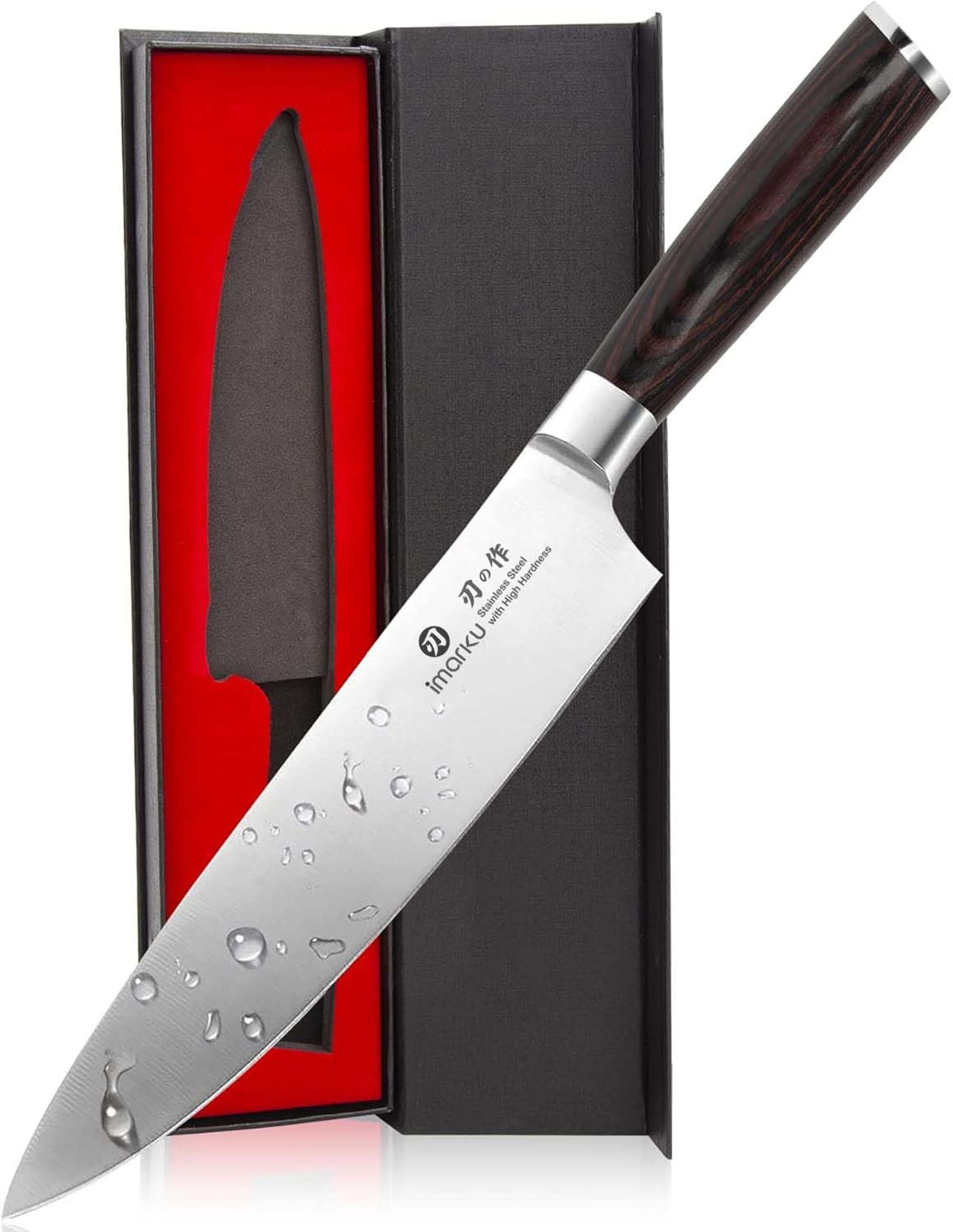
imarku 8-Inch Chef's Knife
High-carbon German stainless steel , sharper out of the box than most budget knives
Buy on Amazon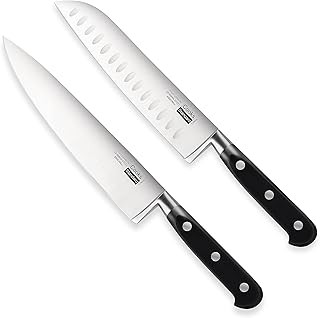
MAC Professional 8-Inch Chef's Knife
Thin Japanese blade profile with a Western-style handle , best of both
Buy on Amazon
Shun Classic 8-Inch Chef's Knife
VG-MAX steel with 68-layer Damascus cladding , razor-sharp out of the box
Buy on Amazon| Product | Price Range | Top Strength | Key Weakness | Buy |
|---|---|---|---|---|
| imarku 8-Inch Chef's Knife best overall | $ | High-carbon German stainless steel , sharper out of the box than most budget knives | Inconsistent quality control compared to established brands | Buy on Amazon |
| MAC Professional 8-Inch Chef's Knife also consider | $$ | Thin Japanese blade profile with a Western-style handle , best of both | Less name recognition than Shun or Wüsthof , harder to buy as a gift | Buy on Amazon |
| Shun Classic 8-Inch Chef's Knife also consider | $$$ | VG-MAX steel with 68-layer Damascus cladding , razor-sharp out of the box | Hard steel (61 HRC) is more brittle , chip risk on bones or frozen food | Buy on Amazon |
| Wüsthof Classic 8-Inch Chef's Knife also consider | $$$ | Full tang, forged German steel , built to last decades with proper care | Heavy at 8.5 oz , some cooks prefer the lighter feel of Japanese knives | Buy on Amazon |
If you’ve found yourself searching “imarku chef knife,” you’re probably at a specific decision point. You want a capable 8-inch chef’s knife, you’re not sure how much to spend, and you’d like a straight answer about whether the budget option actually holds up. Fair enough. This guide covers the imarku 8-Inch Chef’s Knife directly alongside the knives most serious home cooks eventually compare it to, so you can make the call with real information rather than marketing copy.
For a broader look at what we cover in this category, the Knives & Sharpeners hub is worth bookmarking before you buy anything.
What to Look For in an 8-Inch Chef’s Knife
Blade Steel and Hardness
Steel hardness is measured on the Rockwell scale, and the number matters more than most product listings admit. German-style knives typically run 56 to 58 HRC. They’re slightly softer, which makes them easier to hone with a standard honing rod and more forgiving if you drag the blade across a cutting board at a bad angle. Japanese-style blades run harder, often 60 HRC and above, which lets them hold a thinner, sharper edge for longer but makes them more brittle. Chips happen. If you regularly break down bone-in chicken or find yourself cutting through anything partially frozen, a hard Japanese blade will suffer for it.
The imarku uses high-carbon German stainless steel. It won’t reach the edge retention of VG-MAX or similar premium Japanese steels, but it sharpens easily and the steel itself is reasonable for the price band.
Blade Geometry
German knives have a curved belly and a thicker spine, which suits a rocking chop. Japanese knives are thinner and flatter, better suited to a push-cut or pull-cut technique, and noticeably lighter in hand. Neither geometry is objectively better. The question is what your prep work actually looks like most days.
Handle Fit and Balance
A knife that fatigues your hand after twenty minutes of prep is a bad knife for you, regardless of what the steel spec says. Handle material, weight distribution, and the presence or absence of a bolster all affect this. Pakkawood handles (a resin-stabilized wood composite) are comfortable, moisture-resistant, and found on knives across the price spectrum, from the imarku to the Shun Classic.
Full-tang construction, where the steel runs the full length of the handle, generally improves balance and durability. It’s standard on the Wüsthof and Shun. The imarku claims full-tang construction as well, though the build quality isn’t as consistent.
Price vs. Realistic Expectations
Budget knives can be sharp out of the box. The question is how they perform over eighteen months of regular use, how the edge holds, and whether the quality control is reliable enough that you don’t get a dud. Those are honest concerns with any entry-level knife, including the imarku.
Top Picks
imarku 8-Inch Chef’s Knife
The imarku 8-Inch Chef’s Knife is in the budget category, and it performs reasonably well for what it costs. Out of the box, it’s sharper than most knives at this price point. The high-carbon German stainless steel takes an edge, the pakkawood handle is comfortable, and the overall profile is sensible for general kitchen work.
The honest limitation is quality control. If you order from an established brand at the premium price band, you have a reliable expectation of what arrives. With the imarku, there’s more variance. Most buyers get a functional knife. Some get one with a slightly uneven grind or a handle that doesn’t sit quite flush. That inconsistency is the real cost of the lower price, not the steel spec.
For someone equipping a first kitchen, learning knife technique, or not ready to commit to a Wüsthof or Shun, this is a defensible starting point. It won’t embarrass you on prep work. But if you already have a decade of cooking behind you and you’re buying this as an upgrade, it isn’t one.
MAC Professional 8-Inch Chef’s Knife
The MAC Professional 8-Inch Chef’s Knife sits at mid-range pricing and is, in my view, the most underrated knife in this comparison. It runs a thin Japanese blade profile with a Western-style handle, which is a practical combination. The blade is thinner and harder than a German knife, so it holds an edge longer, but it’s not as hard as the Shun’s VG-MAX steel, which makes it easier to sharpen when the time comes.
At 5.8 oz, it’s noticeably lighter than the Wüsthof Classic at 8.5 oz. If you do significant prep volume (I timed my own prep sessions for two weeks after switching), the weight difference becomes real. Professional chefs frequently recommend this knife over options that cost considerably more, which tells you something.
The MAC is thinner than a German knife, so it’s not the right tool for breaking down chicken or anything requiring lateral force on the blade. For vegetable prep, fish, and general fine work, it’s exceptional. It also has essentially no name recognition outside of culinary circles, which is irrelevant to how it performs but matters if you’re buying it as a gift for someone who wanted a Shun.
I’ve written a more detailed breakdown in the MAC Professional Series Chef’s Knife review if you want the full picture on that one.
Shun Classic 8-Inch Chef’s Knife
The Shun Classic 8-Inch Chef’s Knife is the Japanese benchmark at a premium price. The VG-MAX steel core with 68-layer Damascus cladding is genuinely hard at 61 HRC, razor sharp out of the box, and precise in a way that German-profile blades aren’t built to be.
The tradeoff is maintenance and brittleness. At 61 HRC, this blade chips if you use it on bone or press down hard on a dense squash. More significantly, honing it with a standard steel rod will damage the edge. You need a whetstone. If you don’t already own one and aren’t prepared to learn the process, the Shun’s edge will degrade and you won’t have a good way to restore it.
The D-shaped pakkawood handle is comfortable and moisture-resistant. The knife is light, balanced, and clearly made to a high standard. For cooks who do a lot of precise vegetable work and understand Japanese blade maintenance, it’s excellent. For everyone else, the MAC delivers most of the performance at meaningfully lower cost without the chip risk.
Wüsthof Classic 8-Inch Chef’s Knife
The Wüsthof Classic 8-Inch Chef’s Knife is the other premium benchmark, and it’s a fundamentally different knife from the Shun. Forged German steel at 58 HRC, full tang, a bolster that balances the weight well, and the PEtec edge holds up reliably over time. It’s heavier at 8.5 oz, but the weight is distributed through the handle and bolster in a way that suits a rocking chop.
This knife will last decades with regular honing and occasional professional sharpening. That’s not a sales claim; it’s what forged German steel at this price point does when you maintain it. The honing requirement is real, not optional. Use a standard honing rod every few sessions and the Wüsthof stays sharp. Ignore it and the edge folds faster than you’d expect.
Compared to the Shun, the Wüsthof is heavier, more versatile on hard tasks, and more forgiving on sharpening. It won’t take quite as thin an edge as a Japanese blade. For a cook who wants one knife that handles everything without special maintenance practices, this is the one. Worth comparing also to the Zwilling J.A. Henckels Chef Knife if you’re in the German-forged category and weighing options.
How to Choose
If You’re Buying Your First Serious Chef’s Knife
Start with the imarku if the budget category is where you need to be right now. It performs adequately, teaches you what you need from a knife, and doesn’t cost much if you decide six months in that you want something better. If you can reach the mid range, skip the imarku and buy the MAC. The gap in performance and consistency is significant.
If You Already Cook Seriously and Want an Upgrade
The imarku is not the right answer here. At the mid range, the MAC is the better value by a considerable margin. If you’re set on a premium knife, the choice between the Wüsthof and Shun comes down to technique and maintenance. Push-cut style and vegetable-heavy prep: Shun. Rocking chop, varied tasks, standard honing rod: Wüsthof. Both are excellent. The Shun is not better, it’s different.
If Sharpening Is Something You Actively Avoid
Buy the Wüsthof. Honing it with a rod takes thirty seconds and keeps it performing well between sharpenings. The Shun’s whetstone requirement is not difficult, but it does require some investment in equipment and practice. The MAC falls in between; it sharpens more easily than the Shun but benefits from better technique than the Wüsthof requires.
On Storage
Whatever knife you choose, store it properly. A magnetic strip or a knife block prevents edge damage and makes a real difference in how long a sharp edge lasts. If you have multiple knives or travel with them, the Professional Chef Knife Bag review covers storage options worth considering. And if you’re thinking about other blade shapes alongside a chef’s knife, the 5-Inch Santoku Knife review is a useful companion read for understanding where a shorter, flatter blade fits into a working kitchen.
The full picture on everything we’ve tested in this category, including sharpeners and specialty blades, lives in our Knives & Sharpeners hub.
Frequently Asked Questions
Is the imarku chef knife actually worth buying?
For its price band, yes, with realistic expectations. It’s sharper out of the box than most budget knives, the handle is comfortable, and it performs adequately for general prep work. The honest concern is quality control variance, not the steel spec. If you can stretch to mid-range pricing, the MAC Professional delivers more consistent quality and significantly better long-term performance.
How does the imarku compare to Wüsthof or Shun?
It doesn’t, not directly. The imarku is a budget-category knife. The Wüsthof and Shun are premium-category knives with decades of refinement in blade geometry, steel quality, and manufacturing consistency. A fair comparison is what you get per dollar spent, and on that basis the imarku is reasonable. On absolute performance, there’s no real contest.
Do I need a whetstone for a Japanese-style chef’s knife?
If you’re using a Shun Classic or similar knife with a hardness above 60 HRC, yes. A standard honing rod won’t work on that steel and will damage the edge over time. The MAC Professional is an exception: it runs a moderate hardness and can be sharpened on most whetstones without special technique. German-style knives like the Wüsthof maintain well with a standard honing rod and only need a whetstone or professional sharpening every year or two under normal home use.
What’s the difference between honing and sharpening?
Honing realigns the edge without removing metal. When a knife edge folds or rolls from regular use, a honing rod straightens it. Sharpening removes metal to create a new edge. Most knives need honing regularly and sharpening occasionally. Treating them as the same task is the single most common reason a good knife feels dull after a year of regular use.
Is an 8-inch chef’s knife the right size for home cooking?
For most people, yes. An 8-inch blade handles the full range of standard prep, from mincing garlic to breaking down a large cabbage, without being unwieldy on a standard home cutting board. A 6-inch knife is more maneuverable but limits you on larger tasks. A 10-inch knife is faster on bulk prep but fatiguing and hard to control precisely. Eight inches is not a compromise; it’s genuinely the most practical size for home kitchen work.
Frequently Asked Questions
Is the imarku chef knife a good buy for a home cook?
The imarku 8-inch chef knife is a reasonable starter knife for home cooks who want a sharp, functional blade without spending $100 or more. The high-carbon German steel performs well out of the box, though inconsistent quality control means you should inspect the blade geometry and edge upon arrival.
How does the imarku chef knife compare to Wusthof or Shun?
The imarku uses comparable German stainless steel but at a lower hardness and with less precise manufacturing tolerances than Wusthof Classic or Shun. Wusthof and Shun offer better long-term edge retention, more consistent heat treatment, and full warranty support — the imarku is best described as a capable budget option, not a true long-term investment.
What steel is the imarku chef knife made from?
The imarku 8-inch chef knife uses high-carbon German stainless steel, which balances rust resistance with edge-holding capability. It is softer than Japanese steel (typically around 56-58 HRC), making it easy to hone and sharpen at home with standard tools.
Can I use the imarku knife for breaking down chicken or cutting through bones?
The imarku can handle boneless chicken and general butchery tasks, but avoid using it on hard bones or frozen food, as the blade geometry is not designed for heavy impact. For that type of work, a dedicated cleaver or a heavier German knife is a better choice.
What is the best upgrade from the imarku chef knife?
The MAC Professional 8-inch chef knife is the most natural upgrade — it offers a thinner Japanese blade profile with a Western handle and significantly better edge retention than the imarku at a mid-range price. If you prefer a German-style knife, the Wusthof Classic 8-inch is the benchmark.
Where to Buy
imarku 8-Inch Chef's KnifeSee imarku 8-Inch Chef's Knife on Amazon