Immersion Blender Attachments: 3 Models Compared

Affiliate disclosure: Some links on this page are affiliate links. If you buy through them we earn a small commission at no extra cost to you. Recommendations are research-driven; we don't claim personal use of every product reviewed. Product prices and availability are accurate as of the date published and are subject to change. Always check Amazon for current pricing before purchasing. Learn more.

Quick Picks
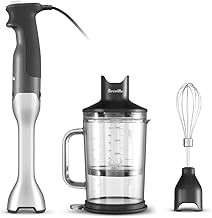
Breville Control Grip Immersion Blender
Bell-shaped guard prevents splashing , practical for soups and sauces
Buy on Amazon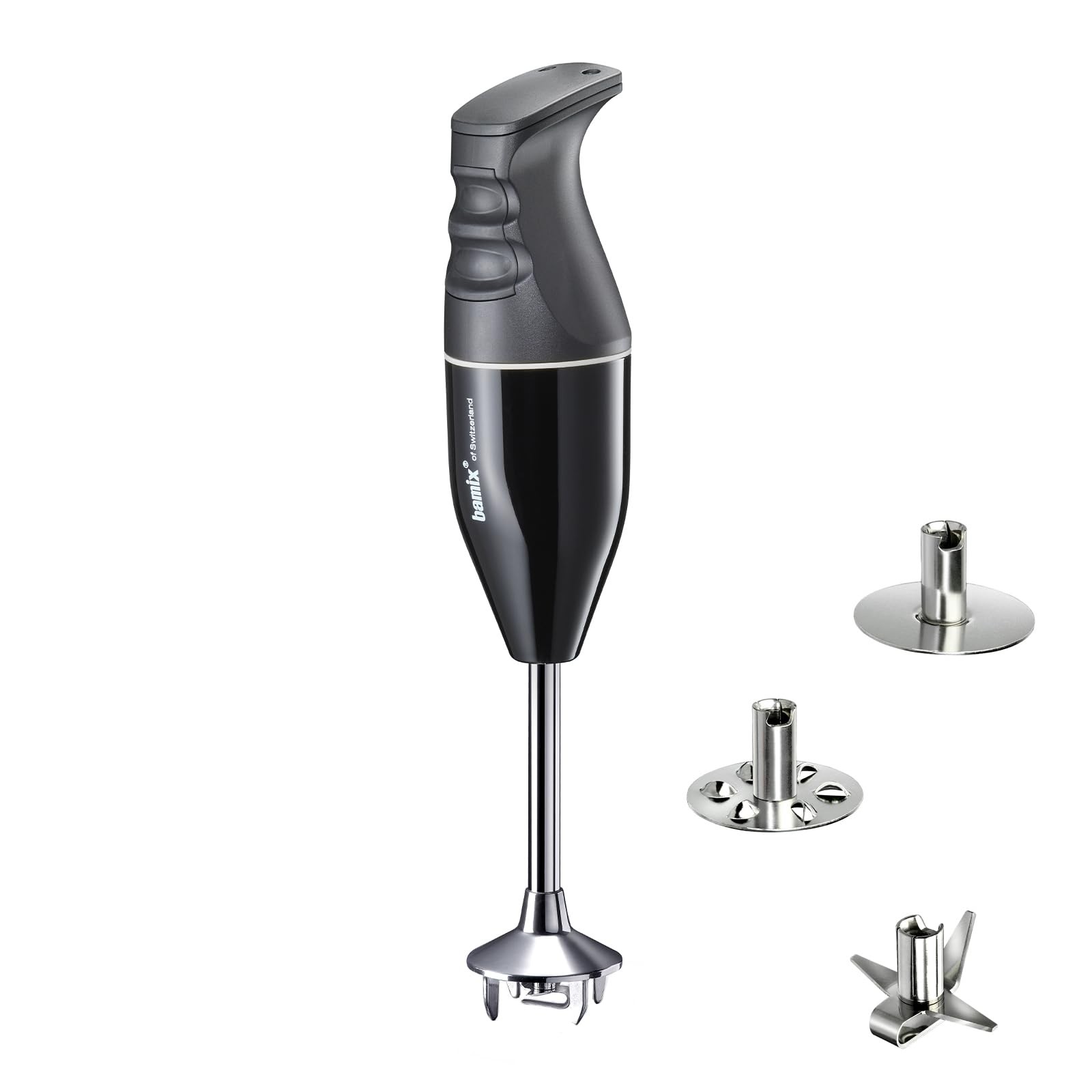
Bamix SwissLine Immersion Blender
Swiss-made motor runs at 12,000 RPM , significantly faster than most immersion blenders
Buy on Amazon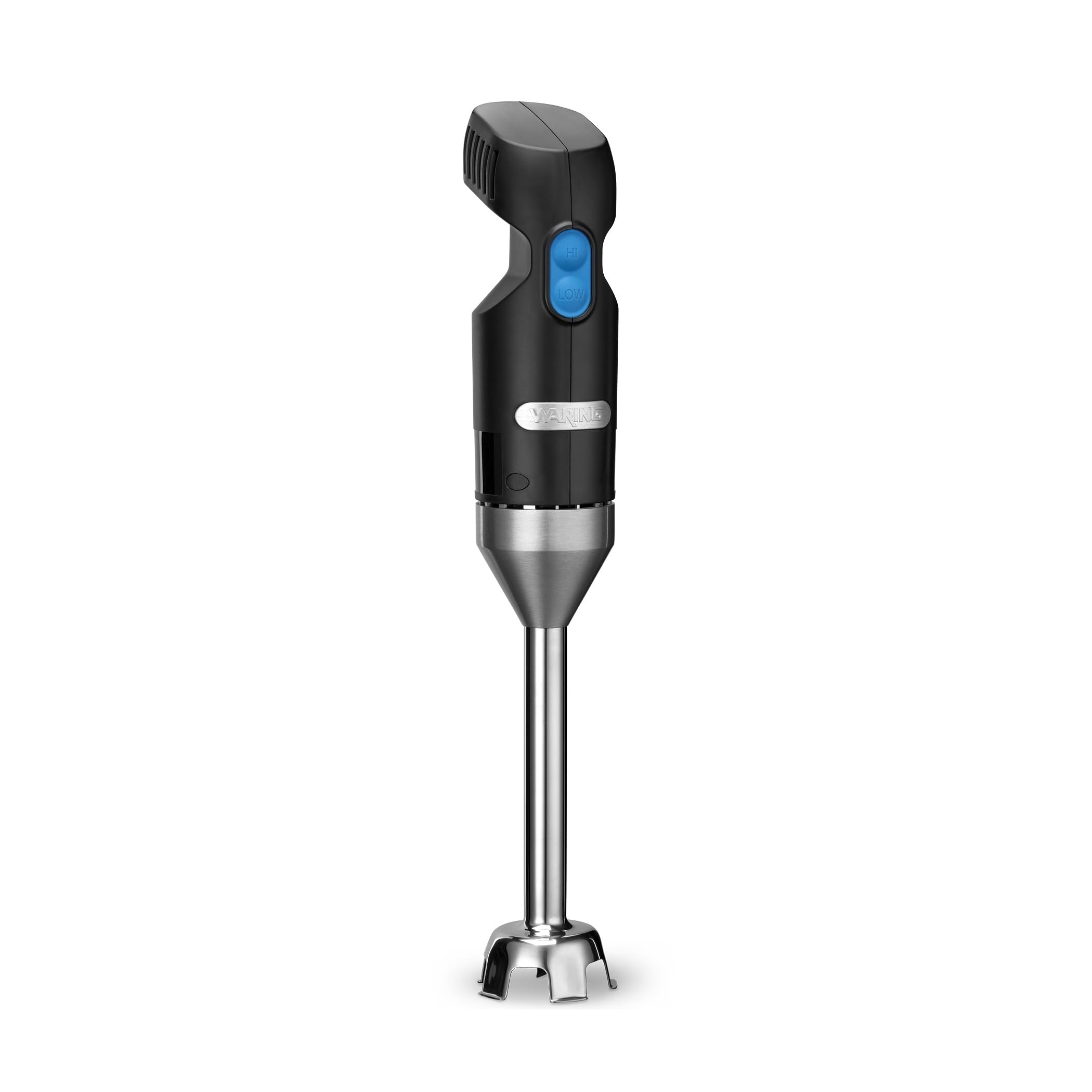
Waring Commercial WSB33X Immersion Blender
Commercial-grade motor designed for continuous use in restaurant environments
Buy on Amazon| Product | Price Range | Top Strength | Key Weakness | Buy |
|---|---|---|---|---|
| Breville Control Grip Immersion Blender best overall | $$ | Bell-shaped guard prevents splashing , practical for soups and sauces | More expensive than basic immersion blenders | Buy on Amazon |
| Bamix SwissLine Immersion Blender also consider | $$$ | Swiss-made motor runs at 12,000 RPM , significantly faster than most immersion blenders | Very expensive for an immersion blender | Buy on Amazon |
| Waring Commercial WSB33X Immersion Blender also consider | $$$ | Commercial-grade motor designed for continuous use in restaurant environments | Heavy and large , designed for commercial use, not home kitchen ergonomics | Buy on Amazon |
Most immersion blenders ship with a basic blending shaft and a plastic beaker. That’s fine until you actually start cooking seriously, and then you start wanting to know whether your blender can handle more than a smoothie. The attachments matter more than the base unit in a lot of cases, and the market is not organized to make this easy to figure out. You’ll find the same vague promises across a dozen product pages.
This guide covers three specific blenders worth considering, what their attachment ecosystems actually look like, and which one I’d buy depending on what you’re trying to do. If you’re browsing the broader Small Appliances category, immersion blenders are one of those purchases that reward specificity over browsing.
What to Look For
The attachment question comes before the blender question. A powerful motor paired with a useless whisk attachment is not a versatile tool. Here’s how to evaluate the category honestly.
Blending Shaft Design
The shaft is the primary attachment, and the differences between good and poor designs show up immediately in actual use. Bell-shaped guards reduce splashing in hot liquids. Open-bottom designs are fine for smoothies but tend to spray stock across the counter. If you make soups regularly, that’s not a minor inconvenience.
Shaft length also matters more than most buyers expect. Standard shafts (around 8 inches) work fine for a Dutch oven or a regular saucepan. If you’re working in deep stock pots, check the shaft length against your actual cookware before buying. For that specific situation, a large immersion blender with an extended shaft may be the right tool.
Motor Power vs. Motor Design
RPM and wattage are not the same measure of usefulness. A motor running at 12,000 RPM in a compact housing does more practical work than a 300-watt motor that oscillates under load. What you want to know is how the motor handles continuous operation, not peak specs.
Whisk and Chopper Attachments
Not every immersion blender brand includes these. The ones that do vary significantly in quality. A flimsy whisk attachment that flexes under pressure won’t whip cream reliably. A chopper bowl with a thin lid that warps after six months is a waste of storage space. If you’re buying for the attachment ecosystem, verify that the attachments are sold in the same bundle or at minimum as genuine manufacturer accessories.
Cleaning
Dishwasher-safe detachable shafts are a real quality-of-life improvement. Blending emulsified sauces or anything with cream and then handwashing a shaft with crevices around the blade guard is a minor annoyance that compounds over time. (I’ve thrown away a blender for this reason. Not my finest moment, but I stand by the principle.)
Top Picks
Breville Control Grip Immersion Blender
The Breville Control Grip Immersion Blender is the sensible mid-range choice, and I mean that as a compliment. Fifteen speed settings with a turbo boost function gives you actual control rather than a low/high toggle that most budget models offer. The bell-shaped guard on the shaft does what Breville claims: it pulls liquid up into the blade rather than pushing it outward. If you’ve ever blended a hot soup and ended up with burns on your forearm, you understand exactly what problem that solves.
The detachable shaft is dishwasher safe, which matters for any recipe involving cream, mayo, or anything with fat that clings. Mid-range pricing puts it above the basic Cuisinart and KitchenAid stick blenders, but not by an amount that’s hard to justify if you cook seriously.
Where I have an actual complaint: it’s heavier than it looks in product photos. If you’re blending a large batch of bisque for ten minutes straight, your hand will notice. Comparable ergonomically to the KitchenAid KHBV53, which I used for four years, but the Breville trades some of that lightness for better motor performance. Reasonable tradeoff for most cooks. Less so if you have wrist or hand fatigue issues.
The attachment ecosystem is functional. A whisk and chopper are available, and they perform adequately. They’re not why you’d buy this blender specifically, but they don’t embarrass the unit either.
Bamix SwissLine Immersion Blender
The Bamix SwissLine Immersion Blender is the one I’d buy if I were spending my own money on a single tool and wanted it to last a decade. The motor runs at 12,000 RPM and weighs 1.6 pounds. That combination is unusual. Most blenders in this power range are heavier. The Swiss motor design is the differentiator here, not as marketing language but as a practical fact: Bamix motors are built to run continuously without the thermal protection shutoffs that interrupt work on cheaper units.
At 1.6 pounds, it’s the most comfortable immersion blender available for extended use. Blending a large batch of soup, emulsifying a vinaigrette in a narrow jar, or making hollandaise directly in a container requires a tool you can hold accurately for more than a minute at a time. The Bamix is premium priced, and that premium is real, not cosmetic.
The limitation worth knowing: the base model does not include food processor or whisk attachments. Bamix sells those separately. If you’re comparing this to the Breville on total bundle value, the Breville comes out ahead on that count. The Bamix wins on power, longevity, and ergonomics. Those are, in my view, the more important variables for a tool you’ll use weekly, but I appreciate that’s not everyone’s priority.
If the Bamix is at the upper edge of your budget and you’re curious about professional-grade alternatives generally, the immersion blender commercial options worth considering are a different category entirely.
Waring Commercial WSB33X Immersion Blender
The Waring Commercial WSB33X Immersion Blender is explicitly not designed for home kitchen ergonomics, and buying it for a home kitchen requires knowing that going in. The motor is commercial-grade, designed for continuous use in restaurant environments. It’s NSF certified. The stainless steel shaft is built for the kind of volume and temperature abuse that would destroy a consumer unit in a season.
If you’re running a catering operation out of your home, or you’re the kind of cook who genuinely processes 30-quart batches and has the pot to prove it, this is the correct tool. Compared to the Bamix, the Waring is power-first and ergonomics-last. It’s heavier, larger, and does not pretend otherwise. Premium pricing reflects restaurant-specification components, not lifestyle branding.
For the actual home cook making four quarts of stock on a Sunday afternoon: this is overkill, and I’d say so plainly. The Bamix will do everything you need with better handling. The Waring is for the narrower situation where you need restaurant-volume capability and you’re willing to manage the form factor to get it. For more on the commercial-grade versus consumer distinction, the Robot Coupe immersion blender comparison is worth reading alongside this.
How to Choose
The choice between these three follows a clear pattern based on actual use.
If your cooking involves daily soups, sauces, and occasional emulsification, and you want reliable performance without spending at the top of the category, the Breville Control Grip is the right unit. Check current price on Amazon. The speed range is genuinely useful, the splash guard works, and the dishwasher-safe shaft is not a small thing.
If you cook frequently, at volume, and want a motor that won’t fail in three years, the Bamix SwissLine is worth the premium pricing. The weight difference is real and matters over a long session. Expect to buy the whisk and processor attachments separately if you want them. Check current price on Amazon.
If you’re operating at commercial volume from a home kitchen, the Waring Commercial WSB33X is the appropriate tool. Most readers are not in this situation. Check current price on Amazon before comparing to the Bamix on value, because the use case for the Waring is narrow.
A note on the attachment question that opened this article: if you’re buying primarily for food processing tasks rather than blending, an immersion blender’s chopper bowl is almost always inferior to a dedicated food processor. The Breville’s attachment ecosystem is the strongest of the three units covered here, but it still won’t replace a full processor. Separately, if you’re deciding between an immersion blender and a countertop blender for your primary appliance, the Vitamix vs Ninja comparison covers that specific tradeoff in detail.
The broader small kitchen appliance category is full of tools with redundant capabilities. Buy the immersion blender for what immersion blenders do well. Blending directly in the pot, emulsifying in a narrow container, pureeing without transferring hot liquid to a countertop blender. If those tasks describe your cooking, one of the three units above will serve you well.
Frequently Asked Questions
What attachments do immersion blenders typically include?
Most immersion blenders include a blending shaft and a mixing beaker at minimum. Mid-range and premium units often include a whisk attachment for cream and eggs and a small chopper bowl for herbs or nuts. The Breville Control Grip includes these in its standard bundle. The Bamix SwissLine sells them separately. Verify what’s included before purchasing, because “complete set” language varies by retailer listing.
Can immersion blender attachments be used interchangeably between brands?
No. Attachment systems are proprietary to each brand, and in most cases proprietary to specific model lines within a brand. A Bamix whisk attachment will not fit a Breville shaft. If you’re buying replacement attachments or expanding a set, confirm the model compatibility explicitly. Generic third-party attachments exist but fit inconsistently and are not worth the risk on a motor you’ve invested in.
Are immersion blender attachments dishwasher safe?
It depends on the unit. The Breville Control Grip’s detachable shaft is dishwasher safe, which is one of its practical advantages. The Bamix and Waring Commercial shafts should be checked against the manufacturer’s current care instructions. Blade assemblies with crevices that trap fat or cream are the main cleaning concern. When in doubt, warm water and a narrow brush immediately after use is the reliable method regardless of what the label says.
What’s the difference between commercial and consumer immersion blender attachments?
Commercial attachments like those on the Waring WSB33X are made from heavier-gauge stainless steel, rated for continuous high-temperature use, and often NSF certified. Consumer attachments are lighter and designed for intermittent home use. The practical gap shows up in shaft durability over years of use and in how the blade guard handles sustained exposure to hot liquids. For most home cooks, consumer-grade attachments on a quality unit like the Breville or Bamix are sufficient.
Is it worth buying extra attachments for an immersion blender?
Conditionally. A good whisk attachment on a 12,000-RPM motor like the Bamix’s is a genuinely useful tool for whipping cream or making meringue without hauling out a stand mixer. A chopper bowl is convenient for small quantities that don’t justify a full food processor. What’s not worth buying: specialty attachments sold as add-ons that don’t fit securely or add bulk without adding capability. Evaluate each attachment on the specific task it performs, not on the theoretical versatility of the set.
Frequently Asked Questions
What attachments do most immersion blenders come with?
Most immersion blenders ship with a basic blending shaft and a plastic beaker. Premium models like the Breville Control Grip or Bamix Swissline often include a whisk attachment and a chopper bowl in the box or as available add-ons, expanding their usefulness beyond pureeing soups.
Can immersion blender attachments be shared between different brands?
No, immersion blender attachments are brand-specific. The shaft and attachment collar vary by manufacturer, so Breville attachments will not fit a Bamix and vice versa. Always buy attachments from the same brand as your blender.
Is a whisk attachment on an immersion blender good enough for whipping cream?
It depends on the motor and whisk quality. A high-RPM motor like the Bamix (12,000 RPM) whips cream effectively directly in a bowl or pitcher. Lower-powered immersion blenders with flimsy whisk attachments tend to flex under load and produce inconsistent results.
What is the bell-shaped guard on immersion blender shafts for?
The bell-shaped guard on blenders like the Breville Control Grip is designed to prevent hot liquid from splashing upward when blending soups and sauces directly in the pot. Open-bottom shaft designs work well for smoothies but frequently splash when used in hot liquid applications.
Do I need a commercial immersion blender like the Waring for home use?
Rarely. Commercial immersion blenders like the Waring are designed for continuous heavy use in restaurant environments and are correspondingly heavy and large. For home use, the Breville Control Grip or Bamix Swissline offer better ergonomics and sufficient power for anything a home cook typically needs.
Where to Buy
Breville Control Grip Immersion BlenderSee Breville Control Grip Immersion Blender on Amazon