Le Creuset Wine Opener: Is It Worth the Premium

Affiliate disclosure: Some links on this page are affiliate links. If you buy through them we earn a small commission at no extra cost to you. Recommendations are research-driven; we don't claim personal use of every product reviewed. Product prices and availability are accurate as of the date published and are subject to change. Always check Amazon for current pricing before purchasing. Learn more.

Quick Picks
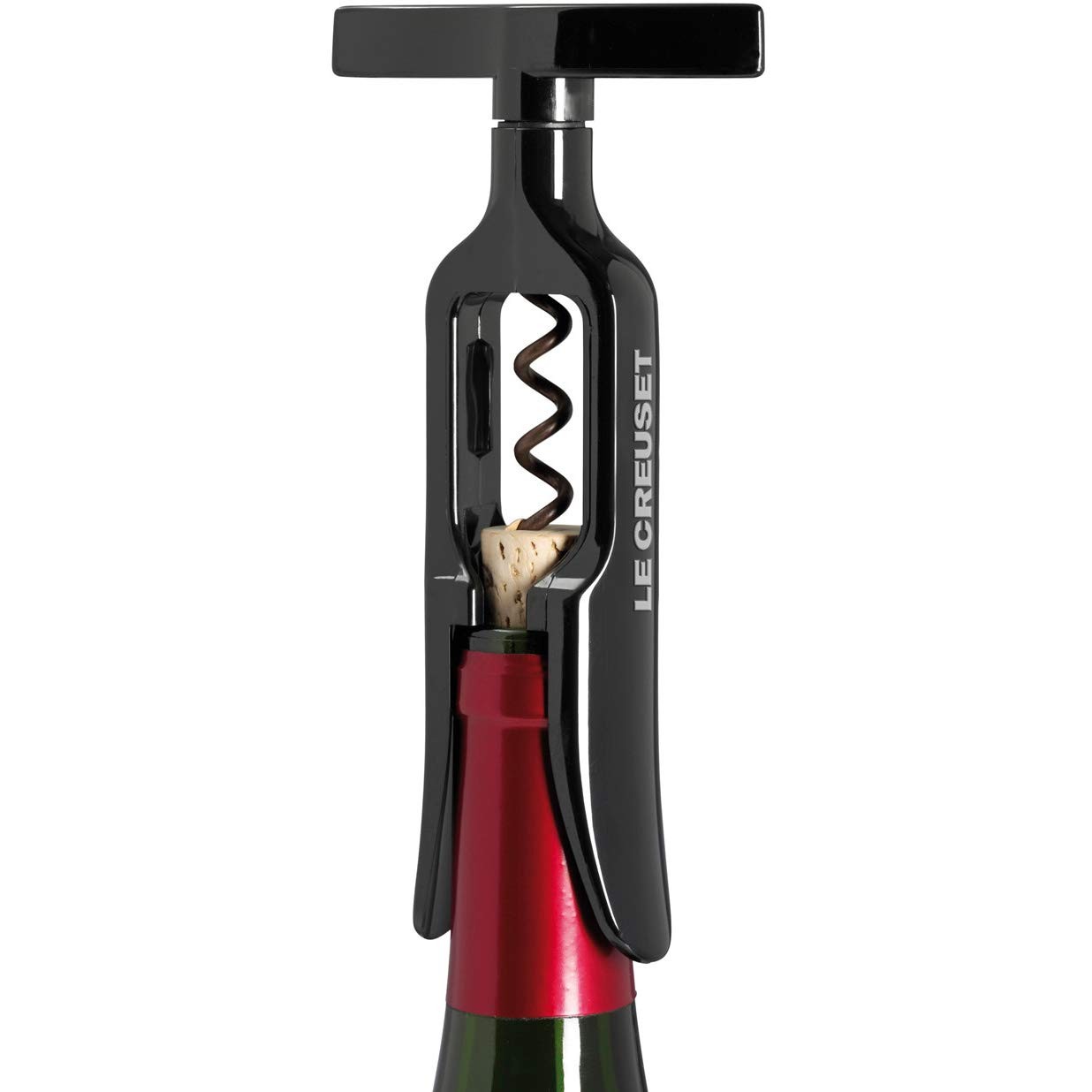
Le Creuset Wine Opener
Effortless lever-style mechanism , opens bottles in two simple motions
Buy on AmazonLe Creuset makes some of the most recognizable cookware in the world, and if you’ve spent any time looking at their Cast Iron collection, you already know the brand carries a certain weight, literally and figuratively. So when someone in the Le Creuset ecosystem starts eyeing their wine opener, the question isn’t really “does it work.” It’s “is the premium worth it, and for whom.”
The short answer is yes, but conditionally. This is a gift article pick, not a practical-cook’s-first-choice pick. The distinction matters, and I’ll explain it.
What to Look For in a Wine Opener
Most wine openers fail in one of two ways. Either the worm (the spiral bit that bores into the cork) is too thin and strips the cork rather than gripping it, or the lever mechanism requires more force than it should, which is a particular problem with older corks that have dried slightly. A good wine opener should feel like a mechanical advantage, not a wrestling match.
The mechanism type. There are three categories worth considering. The waiter’s corkscrew is compact and portable, the design most sommeliers use, but it requires some technique to open cleanly. The rabbit or lever-style opener uses a handle and two arms to extract a cork in a single pull, with almost no technique required. The electric opener does it with a button press, which is genuinely useful for anyone with limited grip strength or arthritis.
Le Creuset’s wine opener is a lever-style. The operation is two motions: clamp the opener onto the bottle neck, pull the handle up and back, and the cork comes out. Reverse the motion to eject the cork. If you’ve ever used a Rabbit-brand opener (the original, from Metrokane, in use since 2009), this is the same basic mechanism.
Build quality. Zinc alloy construction feels different from the plastic-heavy alternatives. It has heft. Whether that heft translates into longer functional life depends on the internals, but for a lever opener used at home, the failure point is almost always the foil cutter or the worm, not the frame.
Size and storage. Lever openers are bulky. The Le Creuset unit is not something that sits in a utensil drawer comfortably. If your kitchen runs compact, that’s a real constraint. A waiter’s corkscrew like the Pulltaps Double Hinged Waiter’s Corkscrew fits in a pocket. The Le Creuset does not.
The aesthetic question. If you own Le Creuset’s Enameled Cast Iron Baking Dish in Marseille or the Dutch oven in Volcanic, you know the brand has a visual identity. The wine opener matches it. For people who think about how their kitchen looks (which is not a frivolous concern, just an honest one), that coherence has value.
Top Picks
Le Creuset Wine Opener
The Le Creuset Wine Opener is mid-range pricing for a wine opener, which sounds reasonable until you compare it against the field. The Rabbit Original Lever Corkscrew runs well under half the price and opens bottles identically. The OXO Steel Vertical Lever Corkscrew, which I find slightly easier to store because of its narrower profile, costs even less. Functionally, there is no meaningful difference between any of these three.
What the Le Creuset unit has that the others don’t is the Le Creuset branding and the build feel. The zinc alloy body has genuine weight, and the foil cutter included with the unit is one of the better ones I’ve used, which is (I realize this is a specific complaint) usually the weakest component on lever openers. Most foil cutters are afterthoughts. This one is not.
The mechanism itself is smooth. Two motions, cork out, done. It handles synthetic corks as cleanly as natural ones, which has become more relevant as winemakers have shifted materials.
Who this is actually for. If you’re buying for yourself and your priority is opening wine reliably and efficiently, buy the Rabbit. Save the money. But if you’re buying as a gift for someone who has invested in the Le Creuset ecosystem, who has the Le Creuset Provence line on their counter and gets satisfaction from a cohesive kitchen, this makes a genuinely thoughtful gift. It’s the kind of thing that person wouldn’t necessarily buy for themselves but will appreciate receiving.
It’s also a fair pick for someone who uses their wine opener frequently enough that the build quality feels worth it. The plastic-framed alternatives work, but they don’t feel like they’ll outlast the decade. The Le Creuset unit, based on construction alone, probably will.
The honest downside. You are paying a premium for branding and aesthetics. The function is identical to much cheaper alternatives. If the recipient doesn’t care about the Le Creuset aesthetic, this is not the right gift. It would be like buying someone a Le Creuset enameled cast iron griddle when they’d be just as happy with a Lodge. Sometimes the Le Creuset premium is worth it. Sometimes it isn’t. With the wine opener, it depends entirely on the recipient’s relationship with the brand.
Check the Le Creuset Wine Opener on Amazon
The bulk is also a legitimate issue. This is not a tool for a small apartment kitchen with one narrow drawer. It’s a countertop piece, or at minimum a dedicated kitchen gadget drawer piece.
How to Choose
The decision tree here is relatively simple.
If you’re buying for yourself and practicality is the priority, skip the Le Creuset and buy the Rabbit or the OXO. Both work as well, and you’ll spend significantly less. That’s not a knock on Le Creuset. It’s just an honest read of what you’re paying for.
If you’re buying as a gift, ask yourself one question: is the recipient a Le Creuset person? If they have the Dutch oven, the braisers, the bakeware, and they take quiet satisfaction in a kitchen where the tools match, then yes, this makes sense. It’s the same logic behind buying someone a Staub Pumpkin Cocotte versus a generic equivalent. The product works, but what you’re really giving is acknowledgment of their aesthetic investment.
If you’re buying for someone who drinks wine frequently but doesn’t have strong feelings about kitchen aesthetics, a well-built lever opener at a lower price point serves them just as well.
A note on gifting in the Le Creuset ecosystem. The wine opener isn’t the only accessory play here. If you’re outfitting a gift basket around French cooking or a nice dinner, pairing this opener with something like a Le Creuset wine aerator or a good bottle of Burgundy makes more sense than the opener alone. Context elevates the object, in gift terms.
Durability expectations. Zinc alloy will outlast injection-molded plastic in normal use. But like all lever openers, the mechanical components that see the most wear are the pivot points and the worm. Keep it clean, don’t drop it on tile, and there’s no reason this shouldn’t last a decade or more. The Rabbit units have lasted eight-plus years with no failures. Build quality being similar or better here, I’d expect comparable longevity.
Storage as a real consideration. If the person you’re buying for has a small kitchen, measure generosity accordingly. A beautiful opener that lives in a cabinet because there’s no room for it isn’t the win it looks like on paper. For small-kitchen buyers or recipients, a waiter’s corkscrew like the Pulltaps is a better fit. For kitchen-drawer-challenged households, the same.
The broader cast iron and enameled cookware community on this site tends toward people who’ve made a deliberate decision to invest in quality kitchen tools. If that describes you or your recipient, the Le Creuset Wine Opener fits the profile. If it doesn’t, it doesn’t, and there’s a cheaper tool that does the same job.
Frequently Asked Questions
Is the Le Creuset wine opener worth the price compared to cheaper alternatives?
Functionally, no. The Rabbit Original Lever Corkscrew opens bottles with the same two-motion mechanism and costs a fraction of the price. The Le Creuset unit charges a premium for brand consistency, zinc alloy construction, and aesthetic integration with the rest of the Le Creuset line. If those things matter to you or the person you’re buying for, the price is defensible. If they don’t, buy the Rabbit.
Does the Le Creuset wine opener work on synthetic corks?
Yes. The lever mechanism and worm design handle synthetic corks without issue. Synthetic corks can be tighter than natural ones, and lever-style openers handle that better than waiter’s corkscrews in general because the mechanical advantage is greater. No special technique required.
How big is the Le Creuset wine opener? Will it fit in a standard kitchen drawer?
It’s a lever-style opener, which means it’s bulkier than a waiter’s corkscrew. It can fit in a large kitchen drawer, but it won’t sit flat alongside other tools without taking up real space. If the kitchen runs compact, plan on it living on the counter or in a dedicated gadget storage area. This is a genuine size consideration, not a minor footnote.
Is the Le Creuset wine opener a good gift for someone who doesn’t own other Le Creuset products?
Less so. The main argument for the price premium is brand coherence within the Le Creuset kitchen aesthetic. For someone who doesn’t have that investment, a well-built opener at a lower price point is a smarter gift. If you want to introduce someone to the brand, start with the cookware, not the accessories.
Does the Le Creuset wine opener come with a foil cutter?
Yes, and it’s one of the better foil cutters included with a lever opener. Most bundled foil cutters are thin, cheap, and not worth using. The one included with this unit cuts cleanly and doesn’t require multiple passes around the bottle neck. It’s a small thing, but it matters in daily use.
Frequently Asked Questions
What type of wine opener does Le Creuset make?
Le Creuset makes a lever-style (rabbit-style) wine opener with a zinc alloy body. It opens a bottle in two motions — clamp onto the neck, pull the handle — and ejects the cork on the reverse stroke.
Is the Le Creuset wine opener worth the price over a cheaper lever opener?
Functionally, no — the Rabbit Original or OXO lever opener opens wine identically at a fraction of the price. The Le Creuset is worth it if you're buying as a gift for someone invested in the Le Creuset aesthetic, or if build quality and brand cohesion matter to you.
Does the Le Creuset wine opener include a foil cutter?
Yes, the Le Creuset wine opener comes with a foil cutter. It is notably better than the foil cutters bundled with most lever openers, which tend to be afterthoughts.
Can the Le Creuset wine opener handle synthetic corks?
Yes — the lever mechanism and worm are designed to handle both natural and synthetic corks without stripping or excessive force, which is increasingly relevant as more winemakers use synthetic closures.
Is the Le Creuset wine opener a good gift for someone who owns Le Creuset cookware?
It makes a thoughtful gift for a committed Le Creuset collector who values kitchen aesthetic cohesion. It's the kind of item they'd appreciate receiving but might not buy for themselves given the price-to-function ratio.
Where to Buy
Le Creuset Wine OpenerSee Le Creuset Wine Opener on Amazon