Staub French Oven Buyer's Guide: What You Need to Know

Affiliate disclosure: Some links on this page are affiliate links. If you buy through them we earn a small commission at no extra cost to you. Recommendations are research-driven; we don't claim personal use of every product reviewed. Product prices and availability are accurate as of the date published and are subject to change. Always check Amazon for current pricing before purchasing. Learn more.
Quick Picks
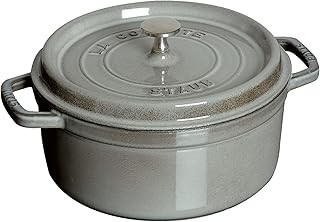
Staub 5.5-Quart Round Cocotte
Self-basting spikes on the lid return moisture back to the food
Buy on Amazon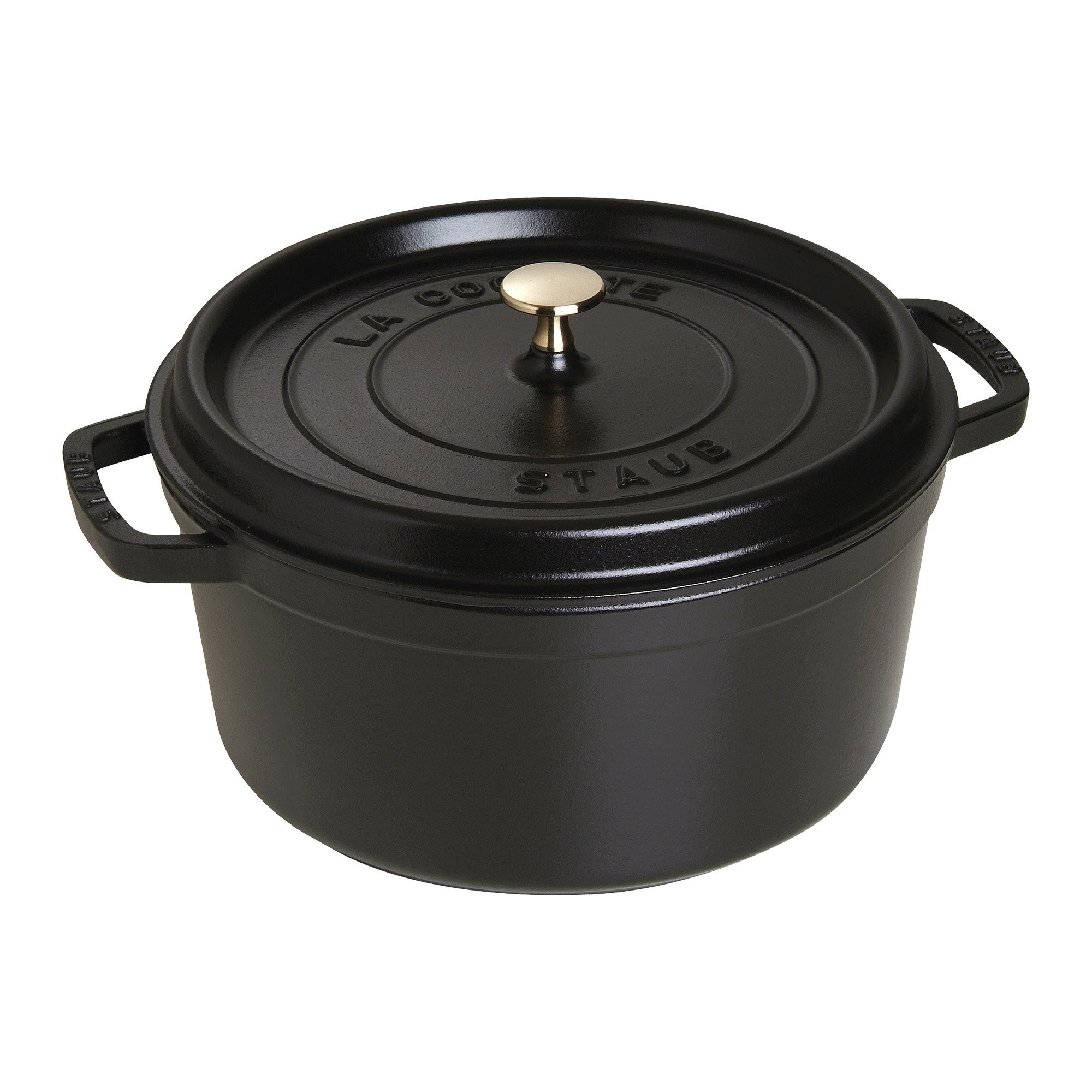
Staub 7-Quart Round Cocotte
Large enough for a whole chicken or a 4-pound roast with vegetables
Buy on Amazon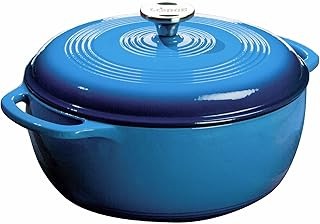
Lodge Enameled Cast Iron Dutch Oven 6-Quart
Enameled interior , no seasoning required, dishwasher safe
Buy on Amazon| Product | Price Range | Top Strength | Key Weakness | Buy |
|---|---|---|---|---|
| Staub 5.5-Quart Round Cocotte best overall | $$$ | Self-basting spikes on the lid return moisture back to the food | Dark interior makes it harder to monitor fond development | Buy on Amazon |
| Staub 7-Quart Round Cocotte also consider | $$$ | Large enough for a whole chicken or a 4-pound roast with vegetables | Very heavy when full , requires two hands and a sturdy surface | Buy on Amazon |
| Lodge Enameled Cast Iron Dutch Oven 6-Quart also consider | $$ | Enameled interior , no seasoning required, dishwasher safe | Enamel quality not as refined as Le Creuset , more prone to chipping over time | Buy on Amazon |
| Le Creuset 5.5-Quart Round Dutch Oven also consider | $$$ | Even heat distribution eliminates hot spots for slow braises | Over $300 at full retail , a significant investment | Buy on Amazon |
A Staub French oven is not a casual purchase. You’re looking at premium pricing, a piece that weighs several pounds before you’ve put anything in it, and a product you’ll likely own for decades if you treat it reasonably well. That’s worth thinking through carefully before you click buy.
I’ve cooked with enameled cast iron for most of my adult life, moving through a Lodge phase, an All-Clad phase for stovetop work, and eventually settling on a Staub cocotte as my primary braising vessel. The French oven category sits squarely within the broader world of cast iron cookware, and the questions buyers ask are usually the same ones: Staub or Le Creuset? What size? Is it actually worth the premium over Lodge? Those are the questions I’ll answer here, directly.
What to Look For in a French Oven
Lid Design Matters More Than Most Buyers Realize
The lid on an enameled French oven is not an afterthought. If you’ve ever lifted a lid mid-braise and watched condensation run off the sides and hit the burner, you know the problem. Staub addresses this with self-basting spikes on the interior of the lid. Condensation collects on those spikes and drops back down onto the food rather than running to the edge and escaping. Le Creuset’s lid is smooth on the interior and relies on a tight seal. Both approaches work, but they work differently, and the cooking result is measurably different in long braises where moisture loss matters.
Interior Color Is a Real Tradeoff
Staub’s matte black enamel interior is one of its defining characteristics, and it’s a genuine tradeoff rather than just a style choice. The dark surface develops a natural patina over time that becomes increasingly nonstick. It also handles high heat without the staining you see on lighter enamels. The downside is practical: fond, the browned bits that form on the bottom of the pan during searing, is harder to monitor on a dark surface. If you’ve ever scorched a braise because you couldn’t see how dark the fond was getting, that’s exactly the problem the black interior creates. Le Creuset’s light cream interior makes fond development easy to read. Neither is wrong. They reflect different priorities.
Size Selection
The most common sizing mistake is going too small. A 5.5-quart cocotte handles a 3-pound braise comfortably and a whole chicken tightly. A 7-quart handles a whole chicken with room for vegetables, or a 4-pound roast without crowding. Crowding matters because moisture released during cooking needs somewhere to go. For households cooking for two regularly, the 5.5-quart is sufficient. For four or more people, or anyone who batch cooks, the 7-quart is the more practical choice even though it’s heavier and more expensive.
Weight and Handling
Enameled cast iron is heavy. That’s partly why it works so well. The thermal mass retains heat evenly and eliminates the hot spots you’d get from a thinner stainless or aluminum pan. But a 7-quart cocotte full of braised short ribs and liquid weighs enough that pulling it from a 350-degree oven requires both hands, a clear path to the counter, and a moment of genuine attention. If you have wrist or grip issues, this is worth factoring in before you buy the largest size available.
Top Picks
Staub 5.5-Quart Round Cocotte
This is the one I use most. The self-basting lid design is the single feature that, in my opinion, most distinguishes Staub from Le Creuset at the functional level. Braises come out with more concentrated flavor because less moisture escapes during cooking. The matte black interior, as noted above, is better suited to high-heat searing than the lighter Le Creuset interior, and over time it builds a patina that genuinely improves with use.
The dark interior is a real limitation if you’re new to monitoring fond without visual cues. After a few uses you calibrate to it, but the adjustment is real. Pricing is premium, comparable to Le Creuset’s equivalent size, so this is not a “better value” argument. It’s a “different tool with specific advantages” argument. Check current price on Amazon.
For most cooks doing braises, soups, stews, and no-knead bread on a regular basis, this is the size I’d recommend first.
Staub 7-Quart Round Cocotte
Same construction and lid design as the 5.5-quart, in a size that handles a whole chicken plus root vegetables without cramming. If you regularly cook for four or more people, or you make large-batch soups and stews that you want to reheat through the week, the 7-quart is worth the additional cost and weight.
It’s a genuinely impressive piece at the table. I don’t usually factor in aesthetics heavily, but a Staub cocotte traveling from oven to table is a practical advantage when you’re not doing extra dish transfers. That said, “table presence” is not a reason to spend money on a larger vessel than you actually need. Buy this size because you’ll fill it, not because it looks good.
The weight fully loaded requires two hands and a stable surface. That’s not a complaint so much as a physical fact you should plan around.
Lodge Enameled Cast Iron Dutch Oven, 6-Quart
The Lodge Enameled is the most practical choice for buyers who want enameled cast iron performance without premium pricing. It sits in the mid-range price band, roughly half the cost of the Staub or Le Creuset equivalents. The thermal mass is comparable. The no-seasoning-required care and dishwasher compatibility make it genuinely easier to maintain day to day.
The enamel quality is the honest limitation. It’s more prone to chipping over time than either Staub or Le Creuset, and the lighter porcelain finish stains more easily. Neither issue makes it a bad pan. They make it a less durable pan, and over a ten-year ownership horizon, the calculus on “spending less now” gets more complicated. Lodge does not offer the same lifetime warranty as Le Creuset.
If you want to understand how enameled cast iron fits into your cooking before committing to premium pricing, the Lodge is a reasonable entry point. If you already know you’ll use it heavily for decades, the premium options are the better long-term investment. Check current price on Amazon.
Le Creuset 5.5-Quart Round Dutch Oven
Le Creuset is the most-reviewed Dutch oven on the market and has been for years. The light cream interior makes fond development easy to monitor, the heat distribution is even, and the lid fits tightly enough to work well for no-knead bread. The lifetime warranty is real and Le Creuset’s customer service on warranty claims is, in my experience asking around, better than average.
The price objection is legitimate. This is one of the pricier options in the category. The counterargument is straightforward: if you use it three times a week for twenty years, the per-use cost is negligible, and at the end of those twenty years you still have the pan. The lifetime warranty reinforces that math. If you’re buying one Dutch oven and you want to stop thinking about the category, Le Creuset is a defensible choice. Compare it to the Staub primarily on lid design and interior color preferences. On those two features, the right answer varies by how you actually cook.
For buyers interested in Le Creuset’s broader range, the Williams Sonoma Le Creuset Dutch Oven piece covers some of the exclusive colorway options worth knowing about, and the Le Creuset Provence collection is worth a look if color matters to you. Check current price on Amazon.
How to Choose
Staub vs. Le Creuset
This is the comparison most buyers are actually making. Here’s how I’d frame it.
If you prioritize moisture retention in long braises, Staub’s self-basting lid gives it a practical edge. If you prioritize being able to see exactly what’s happening on the cooking surface, Le Creuset’s light interior wins. Both are premium pricing. Both are lifetime investments. The Staub is marginally heavier, which means better heat retention but also a heavier lift. Pick based on how you actually cook, not on brand loyalty or aesthetic preference alone.
Size Guidance
For a household of two: 5.5-quart handles most tasks. For four or more: 7-quart is the more practical choice. Do not buy the smaller size thinking you’ll grow into it, if your current cooking already regularly involves feeding four people. You’ll be annoyed at yourself within three uses.
When Lodge Is the Right Answer
The Lodge Enameled is the right answer when the premium price genuinely isn’t warranted by how often you’ll use it, or when you want to test whether this style of cooking fits your habits before committing. I’d rather someone buy the Lodge and use it weekly than buy the Staub and leave it in the cabinet because the purchase felt like a mistake. (I recognize that’s not a flattering framing for an article with affiliate links, but it’s accurate.)
If you’re building out your cast iron collection more broadly, the enameled cast iron baking dish is worth considering alongside whichever Dutch oven you land on. And if slow-cooking with enclosed, moisture-retaining vessels is a regular part of your cooking, the Emile Henry Tagine is worth comparing against a French oven for certain applications, particularly anything with Middle Eastern or North African flavor profiles.
The full landscape of enameled cast iron options is broader than the four products covered here, and it’s worth reading across the category before settling on a size or brand.
Frequently Asked Questions
Is a Staub French oven the same as a Dutch oven?
Functionally, yes. “French oven” and “Dutch oven” describe the same style of vessel: a heavy, lidded pot used for braising, slow cooking, soups, and bread baking. Staub uses “cocotte” or “French oven” as its preferred terminology. Lodge and Le Creuset tend to use “Dutch oven.” The cooking applications are identical.
Can I use a Staub cocotte on an induction cooktop?
Yes. Staub’s enameled cast iron is compatible with all heat sources including induction, gas, electric, and ceramic. The flat-bottomed construction ensures good contact with induction cooktops. Check the specific product listing to confirm compatibility if you’re purchasing an older or specialty model.
How do I clean a Staub French oven without damaging the enamel?
Hand washing with warm water and a soft brush is the standard approach. Avoid metal scouring pads, which will damage the enamel surface. For stuck food, fill the pot with warm water and let it soak for 20 to 30 minutes before cleaning. Staub’s matte black interior is more forgiving of stuck-on residue than lighter enamels, but aggressive scrubbing will still wear the surface over time.
Is the Staub self-basting lid actually better than Le Creuset’s lid?
For braises where moisture retention matters, yes, the self-basting spike design returns condensation to the food more efficiently than Le Creuset’s smooth interior lid. For bread baking, where you actually want some steam to escape at a certain point, the difference is less pronounced. If braising is your primary use case, the Staub lid design is a genuine functional advantage.
What size Staub cocotte should a first-time buyer get?
For most household cooking, the 5.5-quart is the better starting point. It handles a standard braise, a whole chicken, a large soup, or a loaf of no-knead bread without being unwieldy to handle or store. The 7-quart is worth the upgrade only if you regularly cook for four or more people or batch cook intentionally. Buying a larger size “just in case” usually results in a pan that feels awkward for everyday use and sits on a shelf more than it should.
Frequently Asked Questions
What is a Staub French oven, and how is it different from a Dutch oven?
A Staub French oven is the same thing as a Staub cocotte — the terms are used interchangeably. In North America the category is commonly called a Dutch oven; in France it's called a cocotte or French oven. The Staub piece in either case is an enameled cast iron vessel with a heavy lid, suitable for braising, roasting, and bread baking.
What size Staub French oven should I buy?
For most households of two to four people, the 5.5-quart is the most versatile size — large enough for a whole chicken or a four-pound braise, manageable on a standard burner. If you regularly cook for five or more or want to fit a larger roast with vegetables, the 7-quart makes sense.
How does the Staub French oven self-basting lid actually work?
The interior of the Staub lid has small cast iron spikes. As steam rises during braising, it condenses on the cold lid surface and collects on those spikes, then drips back down over the food as a fine, even mist. This keeps the food basted throughout the cook without you lifting the lid.
Is a Staub French oven worth it compared to Lodge enameled cast iron?
The Lodge enameled Dutch oven provides the same cast iron thermal mass at a significantly lower price. The gap is in lid design, enamel refinement, and long-term durability. For a casual cook, Lodge is an excellent value. For someone who braises several times a week and expects to own the pot for twenty years, Staub's construction quality justifies the difference.
Can the Staub French oven go from stovetop to oven?
Yes — Staub enameled cast iron is oven-safe to 900°F. The standard French oven technique — sear on the stovetop, finish low and slow in the oven — is exactly what the vessel is engineered for.
Where to Buy
Staub 5.5-Quart Round CocotteSee Staub 5.5-Quart Round Cocotte on Amazon